

Table of Contents
- Essential Sparring Gear for Kids: What Every Set Must Include
-
Top Sparring Gear for Kids: Our Picks by Budget and Style
- 1. Century 5-Piece Combo Set - Best Entry-Level Pick
- 2. Macho Dyna Combo Karate Sparring Gear Set - Best Mid-Range Value
- 3. Century 7-Piece Combo Set - Best for Competition-Ready Kids
- 4. Macho Dyna 7-Piece Combo with Shin Guards - Best Full-Protection Bundle
- 5. Macho Warrior Combo Set - Best for Advanced Young Practitioners
- 6. Macho Dyna 9-Piece Combo with Face Shield - Best for Maximum Coverage
- Martial Arts Sparring Gear Checklist for Parents
- How to Size Kids Sparring Gear: A Step-by-Step Fitting Guide
- Safety Standards and Association Requirements
- Cleaning and Maintaining Martial Arts Gear
- Conclusion
Last Updated: August 26, 2026
Choosing the right protective equipment for a young martial artist is one of the most important decisions a parent can make. At BlackBeltShop, we've helped thousands of families find sparring gear for kids that balances genuine protection, comfortable fit, and long-term durability. Ill-fitting headgear slips during contact, undersized shin guards leave bones exposed, and cheap foam compresses permanently after a few weeks of training. Below, we break down exactly what every set must include, walk through six specific product picks organized by budget, and give you a practical fitting guide you can use at home.
Quick Picks:
- Best Entry-Level: Century 5-Piece Combo Set - ideal for beginners and first-time buyers
- Best Mid-Range: Macho Dyna Combo Set - solid protection at a competitive price
- Best Competition-Ready: Century 7-Piece Combo Set - full-body coverage for tournament sparring
- Best Full-Protection Bundle: Macho Dyna 7-Piece Combo with Shin Guards - the most complete everyday training set
- Best for Advanced Young Practitioners: Macho Warrior Combo Set - premium materials for serious training
- Best Maximum Coverage: Macho Dyna 9-Piece Combo with Face Shield - when no compromise on safety is acceptable
Essential Sparring Gear for Kids: What Every Set Must Include
Protective equipment for youth martial arts sparring is not optional. A complete set must cover six primary contact zones: the head, hands, feet, shins, groin, and chest. Skipping any one of these in a full-contact or light-contact class is an injury waiting to happen. The specific pieces required vary by discipline, karate and taekwondo point-sparring programs typically mandate headgear, hand protectors, foot guards, and a mouthguard at minimum. Always confirm your dojo's exact requirements before purchasing.
Headgear and Face Protection
Headgear is the single most critical piece of protective equipment in any youth sparring kit. The best headgear for kids uses high-density foam padding to absorb and displace impact energy, reducing the risk of concussions and facial injuries.
Key features to look for:
- Foam density: Look for 3/4" to 7/8" high-impact foam construction. Thinner foam compresses too quickly under repeated strikes.
- Hook-and-loop closure: Adjustable straps keep the headgear from rotating during movement.
- Ear protection: Ear-release canals or padded ear cups prevent cauliflower ear and protect against glancing blows.
- Open-face vs. face shield: Open-face designs offer better visibility and ventilation for most training. Face shields add coverage for newer sparring students or higher-contact environments.
- Breathable mesh or ventilation channels: Kids overheat faster than adults. Strategic ventilation keeps training sessions comfortable and focused.
The American Academy of Pediatrics guidance on youth sports safety consistently identifies head protection as the top priority in contact sports for children under 14.

Shin Guards, Foot Guards, and Hand Protection
Shin guards protect the tibia from low kicks and leg checks, the most common impact zone in karate and taekwondo sparring. Contoured foam shin guards with double velcro straps are the standard. Foot guards protect the top of the foot and ankle during kicks and should fit snugly without restricting ankle flexion. Hand protectors fall into two categories: open-palm gloves for point-sparring, and padded knuckle gloves for light-contact formats. A mouthguard rounds out the essentials. Most schools accept standard boil-and-bite mouthguards.
Top Sparring Gear for Kids: Our Picks by Budget and Style
Every set below is available at BlackBeltShop. All products ship free on orders over $129.
1. Century 5-Piece Combo Set - Best Entry-Level Pick
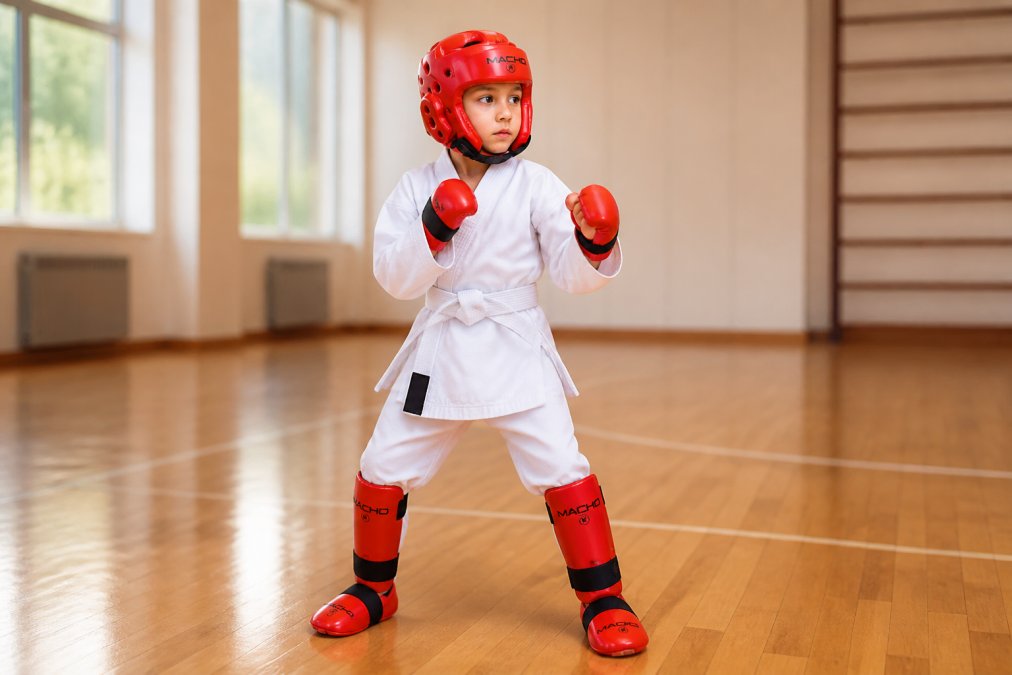
The Century 5-Piece Karate & Taekwondo Sparring Gear Combo Set is the right starting point for most families. It includes student headgear, sparring gloves, sparring boots, a boil-and-bite mouthguard, and a drawstring mesh gear bag. The 5/8" dipped foam construction holds its shape significantly longer than raw foam under regular training. The headgear includes pressure-release ear channels and an adjustable hook-and-loop chin strap. The mesh gear bag allows airflow between sessions, extending the life of the gear.
Best for: First-time buyers, kids in their first 6-12 months of training, parents who want to confirm their child's commitment before investing in premium gear.
2. Macho Dyna Combo Karate Sparring Gear Set - Best Mid-Range Value
The Macho Dyna Combo Karate Sparring Gear Set steps up protection with enhanced padding density and adjustable straps across all pieces. This set includes gloves, shin guards, foot protectors, and headgear, a complete configuration for karate and taekwondo training. Lightweight materials keep total gear weight low, which matters for younger kids who fatigue faster when wearing heavy equipment. Adjustable straps on all pieces allow customized fit as your child grows, extending usable life across multiple belt ranks.
Best for: Kids who have completed their first belt cycle and are sparring regularly, parents who want a step up from entry-level without committing to a premium price.
3. Century 7-Piece Combo Set - Best for Competition-Ready Kids
The Century 7-Piece Karate & Taekwondo Sparring Gear Combo Set adds shin guards and a mouthguard to the core five-piece configuration, providing full-body coverage for standard point-sparring regulations. Premium dipped foam technology displaces impact energy away from the body rather than simply absorbing it. Ergonomic contoured shapes mirror natural curves of hands and feet. Strategically placed ventilation holes maximize airflow, keeping kids cooler during tournament warm-ups.

According to USA Karate's competition equipment guidelines, most national-level youth tournaments require a minimum of headgear, hand protectors, foot protectors, shin guards, and a mouthguard. This seven-piece set meets those requirements.
Best for: Kids competing in regional or national tournaments, students preparing for advanced belt testing, families who want one set that covers all school and competition requirements.
4. Macho Dyna 7-Piece Combo with Shin Guards - Best Full-Protection Bundle
The Macho Dyna 7-Piece Combo Sparring Gear with Shin Guards is the most complete everyday training set. It includes Macho Dyna headgear with ear protection, punch gloves, kicks, and shin guards in matching colors, available in blue, red, white, or black. The 3/4" foam construction is the key differentiator, thicker foam means better shock resistance on repeated impacts. The ear-release canals in the headgear allow sound to pass through without compromising coverage. Sizes run from child S through adult XL, which means this set can grow with a dedicated young practitioner for several years.

Best for: Students training three or more times per week, kids in programs that include both karate and taekwondo sparring, parents who want a single purchase that covers all training scenarios.
5. Macho Warrior Combo Set - Best for Advanced Young Practitioners
The Macho Warrior Combo Karate Sparring Gear Set introduces synthetic leather construction and high-density foam, a meaningful upgrade in both durability and impact absorption. This set includes headgear, gloves, shin guards, foot protectors, and a chest guard. The synthetic leather exterior resists cracking, peeling, and moisture absorption better than standard foam-dipped surfaces. For kids who train intensively or compete frequently, this translates to gear that holds up across a full competitive season without surface degradation.
Best for: Advanced students, kids competing regularly, young athletes whose instructors require chest protection, families who want premium materials without moving to a custom or professional-grade setup.
6. Macho Dyna 9-Piece Combo with Face Shield - Best for Maximum Coverage
The Macho Dyna 9-Piece Combo Sparring Gear with Shin Guards & Face Shield is the most comprehensive set available for youth martial artists. It adds a face shield to the headgear and rounds out the full protective package with Macho Dyna shin guards, kicks, and gloves. The ventilated design prevents heat buildup that makes full-face protection uncomfortable during extended sessions.
Best for: Beginners who are nervous about facial contact, kids in higher-contact programs, parents who want maximum coverage.
Martial Arts Sparring Gear Checklist for Parents
Use this checklist before your child's first sparring class and before any tournament.
| Gear Piece | Required For | Check Before Each Session |
|---|---|---|
| Headgear | All sparring formats | Straps secure, foam intact, no cracks |
| Hand protectors / gloves | All sparring formats | Velcro functional, padding not compressed |
| Foot guards / boots | Karate, taekwondo | Elastic straps intact, toe reinforcement present |
| Shin guards | Most formats, all competitions | Straps hold position, foam covers full shin |
| Mouthguard | All contact sparring | Clean, fits snugly, no cracks |
| Chest protector | Taekwondo, full-contact | Straps adjusted, no delamination |
| Groin protector | Boys in contact sparring | Secure fit, foam density maintained |
| Gear bag | Every session | Mesh or breathable material, not sealed plastic |
- Confirm all required pieces with your child's instructor before purchasing
- Check association-specific color requirements for competition gear
- Verify sizing using head circumference, hand measurements, and foot length
- Inspect all velcro closures before each session, worn velcro is the most common fit failure
- Air gear out after every session; never store damp equipment in a sealed bag
- Replace any piece where the foam has permanently compressed or the surface is cracked
How to Size Kids Sparring Gear: A Step-by-Step Fitting Guide
Sizing sparring gear for kids correctly is the most underestimated part of the buying process. Gear that is too large rotates on impact and leaves gaps in coverage. Gear that is too small restricts movement and cuts off circulation during extended training.
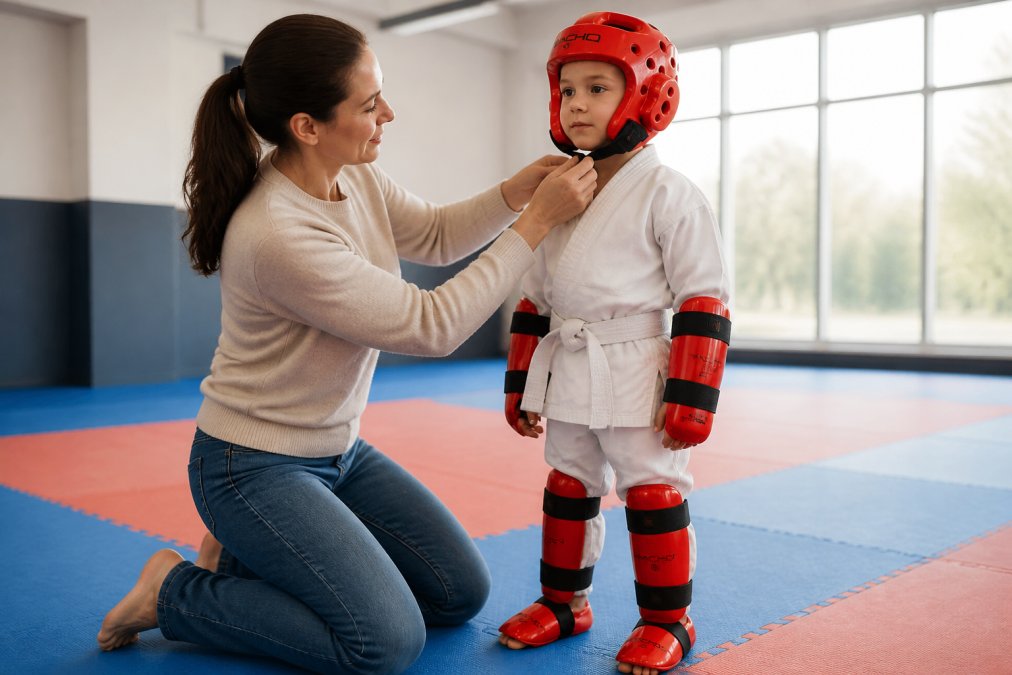
Step 1: Measure head circumference. Use a soft measuring tape placed one inch above the eyebrows and around the widest part of the back of the skull. This measurement determines headgear size.
Step 2: Measure hand width. Wrap the tape around the widest part of the palm, excluding the thumb. Gloves should fit snugly with fingers fully extended, if the child cannot make a fist comfortably, size up.
Step 3: Measure foot length. Have the child stand on a flat surface and measure from the heel to the tip of the longest toe. Foot guard sizing follows standard shoe sizing in most cases.
Step 4: Measure shin length. Measure from the top of the ankle bone to just below the kneecap. Shin guards should cover this entire range without folding or bunching.
Step 5: Test range of motion. Once the gear is on, have your child perform a front kick, a roundhouse kick, and a basic punching combination. Any piece that shifts, rotates, or restricts movement needs to be resized or refitted.
Step 6: Check strap tension. All velcro and hook-and-loop closures should hold firmly without cutting into skin. Run two fingers under each strap, if you can't, it's too tight. If the strap slides freely, it's too loose.
According to the National Athletic Trainers' Association guidelines on youth protective equipment, properly fitted protective gear reduces the risk of soft-tissue injuries significantly compared to ill-fitting equipment in the same impact scenario.
Sensory-Friendly Fit Considerations
Some children have sensory sensitivities that make standard sparring gear uncomfortable or distracting during class. For kids who are sensitive to textures, the foam-dipped surfaces on Century and Macho Dyna gear are generally smoother and less abrasive than raw foam alternatives. The open-palm glove design reduces the sensation of having hands fully enclosed.
Practical adjustments that help:
- Wear a thin compression sleeve under shin guards to eliminate direct foam-on-skin contact
- Use a boil-and-bite mouthguard carefully, over-molded guards that fit precisely cause less sensory distraction than loose-fitting ones
- Choose headgear with ear-release canals rather than full ear cups, which can create uncomfortable pressure for some kids
- Introduce gear gradually, have your child wear one piece at a time during home practice before wearing the full set in class
If your child has a diagnosed sensory processing condition, speak with their occupational therapist before purchasing.
Safety Standards and Association Requirements
Protective equipment for youth martial arts is governed by a combination of association-specific rules and general product safety standards. Understanding which standards apply to your child's program prevents the frustration of buying gear that is disqualified at competition.
USA Karate is the national governing body for Olympic-style karate. Their equipment requirements for youth competitors specify approved headgear, hand protectors, and foot protectors. Color requirements vary by age division and competition format.
USA Taekwondo governs Olympic taekwondo competition and specifies World Taekwondo-approved chest protectors, headgear, and forearm guards for poomsae and kyorugi events.
AAU (Amateur Athletic Union) runs one of the largest youth martial arts tournament circuits. Their equipment standards for karate and taekwondo events are generally consistent with USA Karate requirements, but verify with the specific tournament director before purchasing.
ASTM International publishes voluntary safety standards for martial arts protective equipment. While compliance is not federally mandated, gear built to ASTM standards has been tested for impact absorption, material durability, and construction integrity. As noted in ASTM International's sports equipment standards overview, these standards provide a meaningful benchmark for evaluating protective equipment quality.
Association-specific compliance at a glance:
| Association | Key Gear Requirements | Notes |
|---|---|---|
| USA Karate | Headgear, hand/foot protectors, mouthguard | Color requirements vary by division |
| USA Taekwondo | WT-approved chest protector, headgear, forearm guards | Electronic chest protectors for higher levels |
| AAU Karate/TKD | Consistent with USA Karate baseline | Confirm with tournament director |
| NASKA (sport karate) | Headgear, gloves, boots, shin guards | Widely used in open tournament circuit |
Cleaning and Maintaining Martial Arts Gear
Consistent cleaning extends the life of protective equipment, prevents bacterial growth, and keeps gear performing as designed.
After every session:
- Wipe all foam surfaces with a damp cloth or antibacterial wipe. The smooth dipped-foam exterior on Century and Macho Dyna gear is specifically designed for easy wipe-down maintenance.
- Air gear out completely before storing. Hang headgear and gloves in an open area rather than placing them directly into a bag.
- Remove the mouthguard and rinse it with cool water. Store it in a ventilated case.
Weekly maintenance:
- Inspect all velcro and hook-and-loop closures. Remove lint and debris from the hook side using a stiff brush, clogged velcro is the leading cause of strap failure during sparring.
- Check foam integrity on all pieces. Press firmly on the padding, if it does not spring back, the foam has compressed and the piece needs replacing.
- Wipe the interior lining of the headgear with an anti-microbial spray.
Monthly deep clean:
- Hand wash fabric components in cool water with mild soap. Never machine wash foam-dipped gear, the agitation cycle damages the foam coating.
- Allow all pieces to dry completely in open air before storing. Damp gear stored in a sealed bag develops mold within 48-72 hours.
When to replace gear:
- Headgear: when foam no longer springs back, surface is cracked, or straps no longer hold secure
- Shin guards and gloves: when padding is permanently compressed or exterior surface shows deep cracking
- Mouthguard: every six months with regular use, or immediately if cracked or deformed
- Foot guards: when elastic straps lose tension or reinforced stress points show wear-through
Secondhand headgear and mouthguards should never be used, hygiene concerns aside, you cannot assess the internal foam integrity of used protective equipment by visual inspection alone. Shin guards and foot guards in good visual condition can be reused if the foam passes the compression test and all straps are functional.
Summary
Finding the right sparring gear for kids requires balancing protection, fit, and the specific requirements of your child's program. Parents who buy gear without confirming their school's requirements often end up purchasing twice. Check with your child's instructor first, use the sizing guide above before ordering, and prioritize foam density and strap quality over aesthetics.
BlackBeltShop offers martial arts supplies, including uniforms (gis), karate supplies, and sparring gear across various disciplines. We sell our items at prices that aim to be competitive. We also offer custom embroidered martial arts black belts tailored to your rank and style. Choose custom kanji, names, or academy logos with high-density stitching built to last a lifetime of training. With free shipping on orders over $129, sizing support, and 99.7% positive feedback across 14,728 reviews, we make it straightforward to get the right gear the first time.
Frequently Asked Questions
What age should kids start sparring in martial arts?
Most martial arts schools introduce light-contact sparring around age 7 to 8, once a child has developed basic technique and can follow safety rules. Some programs start earlier with very controlled drills. The decision ultimately rests with the instructor, who will assess the child's maturity and skill level. Regardless of age, proper protective sparring gear for kids, including headgear, shin guards, and a mouthguard, must be fitted and worn before any contact begins.
What are the essential pieces of sparring gear for kids?
A complete martial arts sparring gear checklist for kids includes: headgear with ear protection, sparring gloves with padded knuckles, foot guards or sparring boots, shin guards, a mouthguard, and for many disciplines, a groin protector and chest protector. Some associations also require forearm guards. Buying a combo set is a reliable way to ensure every piece matches in padding density and fits together correctly, rather than mixing individual items from different lines.
How do I determine the correct size for kids' sparring equipment?
Sizing sparring gear for kids starts with three measurements: head circumference for headgear, hand circumference for gloves, and foot length for boots and shin guards. Always check the brand's specific sizing chart before ordering, a child size medium from one manufacturer may differ from another. Gear should feel snug without pinching. Straps with hook-and-loop closure should fasten securely at the midpoint of their adjustment range, leaving room to tighten as the child grows.
What is the difference between point sparring gear and continuous sparring gear?
Point sparring gear, common in karate and taekwondo, is designed for light-contact or semi-contact formats where action stops after each scored technique. It tends to be lighter, with thinner foam padding and open-palm gloves for better control. Continuous sparring gear, used in full-contact formats and some MMA training, features denser padding and more coverage for sustained exchanges. If your child competes in a specific association, confirm the format and gear regulations before purchasing.
How often should I replace my child's protective sparring gear?
Inspect your child's sparring gear every few months. Replace any piece where the foam padding has compressed noticeably, the outer shell is cracking, or the straps no longer hold a secure fit. For actively training kids, most gear lasts one to two years before the shock resistance degrades. A mouthguard should be replaced at least once a year or whenever it no longer fits snugly after a boil-and-bite reset. Gear that has absorbed heavy impact should be replaced sooner, regardless of visible condition.
This article was written using GrandRanker