

Table of Contents
- Why Your Home Practice Needs the Right Training Weapons
- Quick Comparison: Top Training Weapons for Home Practice
- 1. Black Hardwood Bo Staff: The All-Rounder for Kata and Flow
- 2. Shinai Bamboo Sword: Realistic Strikes Without the Blade
- 3. Foam Training Weapons for Safety: Escrima, Tonfa, and Nunchaku
- 4. Rubber Sai and Plastic Kama: Beginner-Friendly Kobudo Tools
- 5. Hardwood Bokken with Scabbard: Precision Sword Work
- Martial Arts Weapon Storage Solutions and Maintenance Tips
- Frequently Asked Questions
Last Updated: September 4, 2026
Why Your Home Practice Needs the Right Training Weapons
Training at home is where muscle memory gets built between dojo sessions, but the gear you use determines whether that practice builds skill or bad habits. The best training weapons for home practice balance three things: realistic weight and feel, a safety profile that works in a living room or garage, and durability that survives daily repetition. Most practitioners make the mistake of buying either a display piece that's too heavy to swing safely or a toy that teaches nothing about proper mechanics.
At BlackBeltShop, we've outfitted thousands of martial artists across karate, kobudo, and MMA, and the single most common question we hear is about what's actually safe to practice with outside a supervised dojo. The answer isn't one weapon, it's a small arsenal matched to your discipline and your space. A 6-foot bo staff needs different clearance than a 20-inch escrima stick, and a rubber sai behaves nothing like a steel one.

This guide breaks down six proven training weapons for home practice, what each one does best, and where it falls short. We'll also cover storage and maintenance so your gear lasts through years of training, not months.
Quick Comparison: Top Training Weapons for Home Practice
Every weapon below earns its place for a specific reason, but they're not interchangeable. The table shows at a glance which tool fits which goal, then we'll go deeper on each one.
| Weapon | Price | Best For | Safety Profile | Skill Level |
|---|---|---|---|---|
| Black Hardwood Bo Staff | $54.99 | Kata, flow drills, spinning | Moderate (hardwood, needs space) | Beginner to advanced |
| Shinai Bamboo Sword | $61.99 | Striking practice, kendo forms | High (flexible bamboo slats) | All levels |
| Foam Escrima Sticks | $27.99 | Partner drills, youth training | Very high (foam over PVC) | Beginner friendly |
| Rubber Sai | $31.99 | Kobudo kata, learning grips | High (flexible rubber) | Beginner to intermediate |
| ProForce Plastic Kama | $24.99 | Forms training, demonstrations | High (rounded plastic) | Beginner friendly |
| Hardwood Bokken with Scabbard | $79.99 | Sword drawing, iaido practice | Moderate (solid wood) | Intermediate to advanced |
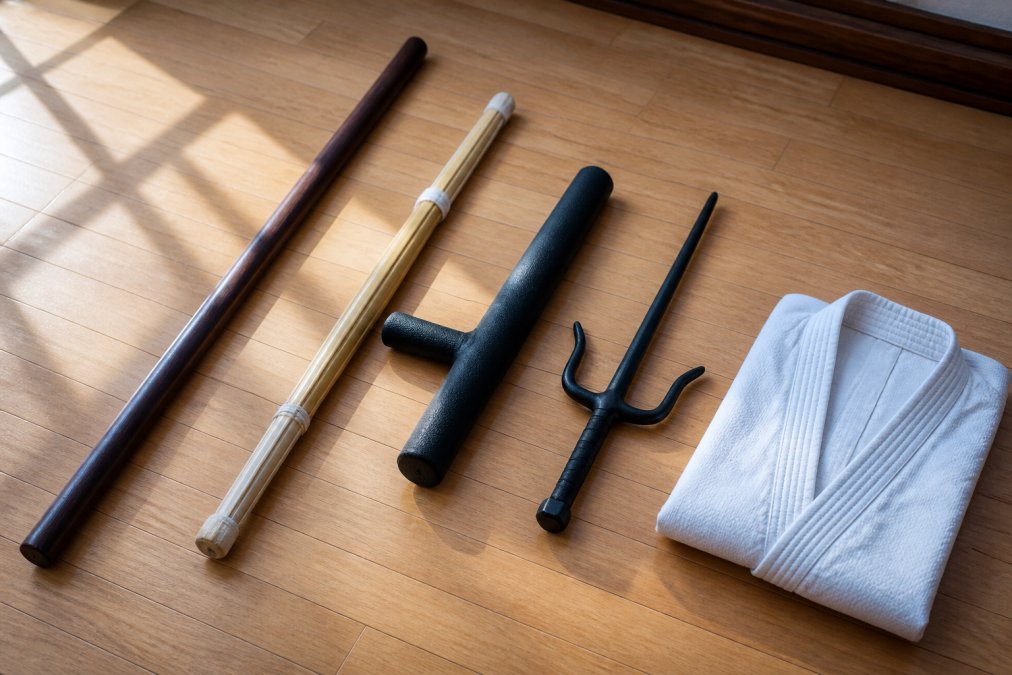
1. Black Hardwood Bo Staff: The All-Rounder for Kata and Flow
The bo staff is the backbone of traditional weapons training, and the Black Hardwood Bo Staff from BlackBeltShop delivers the weight and balance you need for serious practice. Built from solid hardwood with a smooth black finish, this staff measures 1-1/4 inches in diameter and comes in 5-foot or 6-foot lengths, so you can match it to your height and available space.

What makes this one of the best training weapons for home practice is its versatility. You can run through kata sequences, practice spinning and flow drills, or work on striking combinations against a heavy bag. The polished coating gives you a secure grip even when your hands get sweaty, and the balanced weight distribution means the staff moves as one piece rather than feeling tip-heavy.
The tradeoff is obvious: this is solid hardwood. It demands respect for your surroundings. Practice away from furniture, windows, and other people. For beginners, the 5-foot version is easier to control while you learn basic angles and grips.
Black Hardwood Bo Staff karate martial arts
2. Shinai Bamboo Sword: Realistic Strikes Without the Blade
The Shinai Bamboo Sword replicates the feel of a katana for striking practice without the danger of a metal edge. Made from quality bamboo slats with leather fittings at the handle and tip, this shinai is flexible enough to absorb impact yet rigid enough to teach proper cutting angles and follow-through.
Kendo practitioners have used shinai for centuries precisely because bamboo flexes on contact rather than transferring the full force of a strike. That makes it one of the safest training weapons for home practice when you're working on swing mechanics, target acquisition, or partner drills with controlled contact. The lightweight design at roughly 47 inches keeps arm fatigue low during long repetition sets.
Where the shinai falls short is in solo kata that requires drawing and sheathing motions. For that, you'd want the bokken with a scabbard covered later in this guide. But for pure striking practice, the shinai is hard to beat at this price point.
Shinai Bamboo Sword Karate Practice
3. Foam Training Weapons for Safety: Escrima, Tonfa, and Nunchaku
Foam training weapons fill a specific niche: they let you practice full-speed techniques with a partner or introduce weapons to younger students without the risk of serious injury. The Black Practice Foam Escrima with Gold Dragon pairs a 1/4-inch foam exterior with a rigid PVC inner core, giving you realistic weight and handling while keeping impact forces manageable.

The same construction philosophy applies to the Black Foam Tonfa and the Foam Cushion Grip Practice Nunchaku. The tonfa features a comfortable grip handle and a round design that's easy to hold during blocks and strikes. The nunchaku comes in 8-inch (kid) or 12-inch (adult) lengths with foam padding over PVC cores and a traditional nylon cord connection.
For martial arts weapon storage solutions, foam gear is the easiest to maintain since it doesn't require oiling or conditioning. Just wipe it down after practice and keep it out of direct sunlight, which can degrade the foam over time.
One honest limitation: foam weapons don't replicate the exact weight distribution of their wooden counterparts. If you're preparing for competition or rank demonstrations with traditional weapons, you'll want to transition to the real thing once your technique is solid.
Childrens Black Practice Foam Escrima with Gold Dragon Kali
Black Foam practice Tonfa Karate martial arts
Foam Cushion Grip Practice nunchaku Cord/String
4. Rubber Sai and Plastic Kama: Beginner-Friendly Kobudo Tools
Kobudo weapons like the sai and kama present unique challenges for home practice because their steel versions are heavy and unforgiving. The Rubber Sai solves this with flexible rubber construction that mimics the size and feel of a traditional sai at a fraction of the risk. Each sai measures 19-1/2 inches long, and they're sold in pairs so you can practice dual-weapon techniques.
For beginners, rubber is the right call. You can drop a sai, fumble a grip change, or misjudge a block without injuring yourself or damaging your floor. The flexibility also teaches you proper grip pressure, since squeezing too hard on a rubber sai is immediately obvious and uncomfortable.
The ProForce Plastic Kama takes a similar approach for this traditional Okinawan weapon. Made from durable molded plastic in one solid piece, these kama have rounded edges that reduce injury risk while you learn the basic strikes, blocks, and transitions. They're lightweight enough for extended forms practice and safe for youth practitioners.
Rubber Sai Karate Kata Practice and Learning
ProForce Plastic Kama martial arts karate practice
5. Hardwood Bokken with Scabbard: Precision Sword Work
The Hardwood Bokken with Wooden Scabbard is the closest you'll get to katana practice without a live blade. This 29-inch bokken comes with a matching wooden saya (scabbard), and a built-in magnet holds the sword securely in place until you draw it. That detail matters more than you'd think, because it lets you practice smooth, realistic drawing techniques without the sword rattling or slipping.
Bokken practice builds precision. The solid hardwood construction provides realistic weight, which trains your wrists and forearms to control the blade through proper technique rather than muscling it. It's ideal for karate, kendo, aikido, and iaido practitioners who want to refine their sword work between classes.
The scabbard adds a dimension most training swords skip: you can practice the full draw-and-sheath sequence, which is a core skill in iaido and several karate kata. A 40-inch version is also available for practitioners who prefer a longer blade.
Hardwood Bokken with Wooden Scabbard
Martial Arts Weapon Storage Solutions and Maintenance Tips
Proper storage does more than keep your training space organized, it extends the life of your weapons and prevents accidents. Wooden weapons like the bo staff and bokken are vulnerable to warping and cracking when exposed to temperature swings or humidity. Store them horizontally on a rack or vertically in a corner, away from radiators, direct sunlight, and damp basements.
Here's a practical maintenance checklist for the most common training weapons:
- Hardwood weapons (bo, bokken): Wipe down after each session to remove sweat and oils. Apply a thin coat of furniture oil or lemon oil every few months to keep the wood from drying out.
- Bamboo shinai: Check the slats regularly for splits or splinters. Replace the leather fittings if they crack or loosen. Store it standing on the tip end so moisture drains out of the handle.
- Foam weapons: Clean with a damp cloth and mild soap. Avoid leaving them in a hot car or garage, heat can warp the PVC core and degrade the foam.
- Rubber sai and plastic kama: These are the lowest maintenance options. Rinse with water and dry thoroughly if they get dusty. Check for cracks before each use, especially at stress points.
- Rattan weapons: The Combat Cane and similar rattan tools should be inspected for deep cracks or excessive fraying. Store in a cool, dry place and note that natural variations in color and diameter are normal.
Choosing the best training weapons for home practice comes down to matching the tool to your discipline, your space, and your experience level. Start with safer options like foam or rubber versions if you're new to weapons work, then progress to hardwood and bamboo as your control improves. Store everything properly, inspect it regularly, and you'll have training partners that last for years.
Building a home practice arsenal isn't about buying everything at once, it's about choosing the right training weapons for your goals and your space. At BlackBeltShop, we stock the full range covered here, from beginner-friendly foam escrima sticks to precision hardwood bokken, all at 10-40% below regular retail. With free shipping on orders over $129 and expert assistance to match gear to your discipline and skill level, you can build your home dojo with confidence. Check out our training weapons collection and start practicing with purpose.
Frequently Asked Questions
What are the best training weapons for beginners practicing at home?
For beginners, foam training weapons are the safest starting point. Foam escrima sticks, foam tonfa, and foam nunchaku allow you to build muscle memory and coordination without the risk of injury from hard wood or metal. Rubber sai and plastic kama are also excellent choices because they mimic the weight and feel of traditional kobudo weapons while remaining safe for solo drills and kata practice.
How do I choose the right weight for a training bo staff?
The right bo staff weight depends on your height, strength, and experience level. A 5-foot hardwood staff is suitable for practitioners under 5'8", while taller martial artists typically prefer a 6-foot staff. The staff should feel balanced in your hands, not too heavy to control during spins and not so light that it lacks feedback. Start lighter to perfect your form, then progress to a heavier staff as your control improves.
Are foam-padded weapons effective for home practice?
Yes, foam-padded weapons are highly effective for home practice, especially when you're learning new techniques or drilling with a partner. They allow full-speed movement patterns without the fear of injury, which means you can focus on form and technique. Foam weapons with a rigid PVC core, like the Black Foam Tonfa or Practice Escrima sticks, provide enough structure to simulate real weapon handling while remaining safe.
How do I maintain my martial arts training weapons?
Proper maintenance keeps your training weapons safe and extends their lifespan. For hardwood weapons like bo staffs and bokken, wipe them down after use and apply a light coat of oil every few months to prevent drying and cracking. Bamboo shinai should be checked regularly for splinters and stored in a cool, dry place. Foam weapons can be cleaned with a damp cloth and mild soap. Always store weapons off the ground, preferably on a wall rack or in a dedicated bag to prevent warping.
This article was written using GrandRanker