

Table of Contents
- Quick Comparison: Durable Karate Gi Options
- Karate Gi Fabric Weight Guide: 7 oz to 12 oz
- How to Measure for a Martial Arts Gi (And Get It Right)
- Top Picks for a Durable Karate Gi Built for Daily Training
- How to Wash and Maintain a Karate Gi So It Lasts
- Shrinkage, Climate, and Repairs: What Most Buyers Learn Too Late
- Which Gi Fits Your Training Schedule?
- Frequently Asked Questions
Last Updated: September 30, 2026
Quick Comparison: Durable Karate Gi Options
A durable karate gi for daily training comes down to fabric weight, stitching quality, and how the uniform handles repeated washing. This guide from BlackBeltShop breaks down every option by oz rating, material blend, and best use so you can match a uniform to your actual training schedule.
Here's what most buyers get wrong: they chase the heaviest fabric they can find, then quit wearing it because it's miserable in a warm dojo. Durability comes from reinforced stitching and tear resistance, not weight alone.
| Uniform | Fabric Weight | Material | Best For | Price |
|---|---|---|---|---|
| ProForce 10 oz. Karate Uniform | 10 oz | 55/45 cotton-poly blend | Daily wear, all levels | $114.99 |
| Punok Training Uniform | Lightweight | Cotton-poly, WKF approved | Budget competition | $39.99 |
| Adidas Grand Master Gi | 7 oz | 65/35 poly-cotton, ClimaCool | Kata snap, competition | $114.99 |
| Macho 7 oz Student Uniform | 7 oz | Cotton-poly blend | Beginners | $54.99 |
| 12 oz Tang Soo Do Jacket + Pant | 12 oz | 100% cotton canvas | Heavyweight training | $79.99 + $34.99 |
Below, we'll show you exactly how weight, weave, and care habits decide whether a gi survives two years of daily practice or falls apart in six months.

Karate Gi Fabric Weight Guide: 7 oz to 12 oz
Fabric weight in a karate gi is measured in ounces per square yard, and it determines how the uniform feels, sounds, and holds up. A 7 oz gi suits beginners and warm climates. A 10 oz gi balances durability with mobility. A 12 oz gi delivers the crisp snap instructors listen for during kata.
The trade-off is straightforward. Heavier fabric resists tearing and holds its shape longer, but it traps more heat and takes longer to dry. Lighter fabric moves freely and dries fast, but wears through faster at the knees, shoulders, and lapel.
- 7 to 7.5 oz: Best for beginners, youth students, and hot training halls
- 10 oz: The sweet spot for daily practice across most disciplines
- 12 oz: Heavyweight canvas for advanced practitioners and forms competition
Most martial arts uniforms sold today use a cotton blend rather than pure cotton. A cotton-polyester blend resists shrinkage and wrinkles, which matters when you're washing the gi three or four times a week.
How to Measure for a Martial Arts Gi (And Get It Right)
Measuring for a martial arts gi means matching your height and weight to the manufacturer's size chart, not your street clothing size. Gi sizing runs on its own scale, and a size that fits your chest may hang too short in the sleeve.
Start with these measurements:
- Height: Stand straight against a wall in bare feet
- Weight: Use your current weight, not a goal weight
- Sleeve length: Measure from shoulder seam to wrist bone
- Inseam: Measure from crotch to ankle bone
Cross-reference all four against the size chart. When you land between two sizes, size up. A gi that's slightly loose can be adjusted with the drawstring and hemmed sleeves.
Top Picks for a Durable Karate Gi Built for Daily Training
The best durable karate gi for daily training is the ProForce 10 oz. Karate Uniform, which pairs mid-weight fabric with reinforced stitching at a price that holds up to constant wear. The other four picks below cover specific needs: budget competition, kata performance, first-time students, and heavyweight forms work.
ProForce 10 oz. Karate Uniform: Best Overall for Daily Wear
The ProForce 10 oz. Karate Uniform is the best all-around choice for practitioners who train four or more days a week. The 55% cotton, 45% polyester blend combines softness with wrinkle resistance, so it survives repeated washing without losing shape.
Check out the ProForce 10 oz. Karate Uniform
Punok Training Uniform: Best Budget WKF-Approved Pick
The Punok Training Uniform is World Karate Federation approved and costs a fraction of most competition gis, which makes it the smart pick for students who need a tournament-legal uniform without overspending.
Check out the Punok Training Uniform

Adidas Grand Master Gi: Best for Kata Snap and Competition
The Adidas Grand Master Gi is built for competitors who need their uniform to make an impression. The 7 oz ribbed waffle weave produces the sharp snap judges associate with crisp technique.
ProForce® 10 oz. Karate Uniform - 55/45 →
Check out the Adidas Grand Master Gi

Macho 7 oz. Student Uniform: Best First Gi for Beginners
Beginners should start with the Macho 7 oz. Student Uniform. It includes the jacket, pants, and a white belt for one price, and the lightweight fabric keeps new students comfortable while they build endurance.
Check out the Macho 7 oz. Student Uniform
12 oz. Tang Soo Do Jacket and Pant: Best Heavyweight Setup
The 12 oz. Traditional Tang Soo Do Jacket is the heavyweight option for practitioners who want maximum durability and the audible snap that signals powerful technique. Crafted from 100% premium cotton canvas, it softens with each wash while keeping its structure.
Check out the 12 oz. Tang Soo Do Jacket
How to Wash and Maintain a Karate Gi So It Lasts
Washing a karate gi correctly is the single biggest factor in how long it lasts. Cold water, mild detergent, and air drying will keep a quality uniform in service for years. Hot water and a hot dryer will shrink it, fade it, and break down the fibers within months.
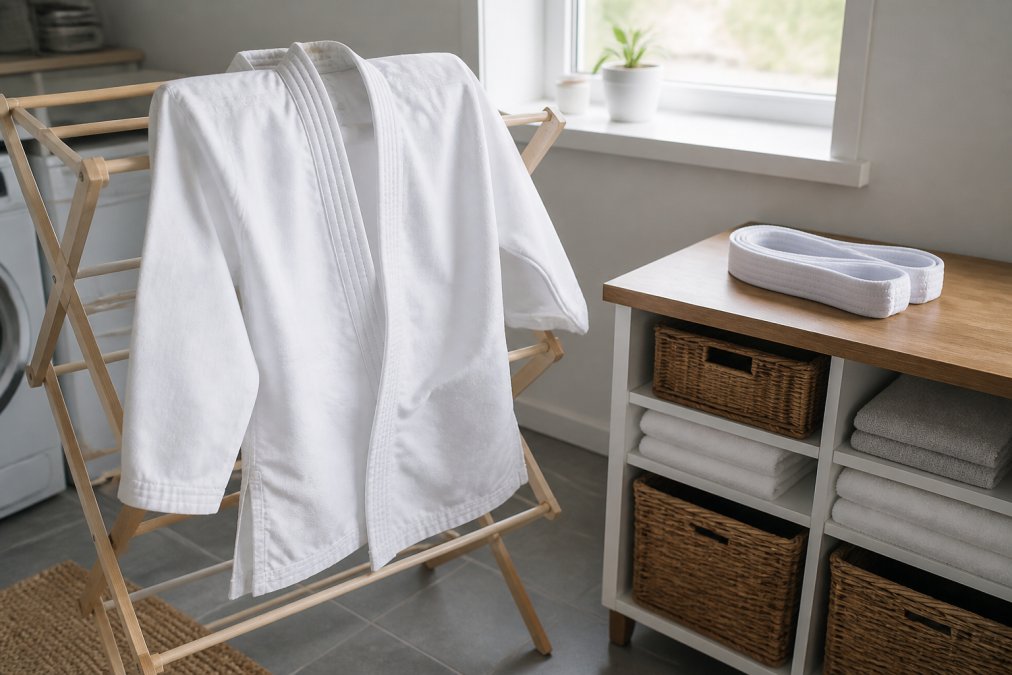
Follow this routine:
- Wash in cold water on a gentle cycle after every two to three sessions
- Use mild detergent, never bleach or fabric softener
- Turn the jacket inside out to protect the outer weave
- Hang to air-dry, ideally outdoors or near a fan
- Wash white and colored gis separately to prevent dye transfer
- Treat stains immediately with cold water before they set
Shrinkage, Climate, and Repairs: What Most Buyers Learn Too Late
Three things decide whether a durable karate gi for daily training actually lasts: how much it shrinks, how your climate treats it, and whether you repair small damage before it spreads. Most buyers learn all three the hard way.
Which Gi Fits Your Training Schedule?
Match the uniform to how often you actually train, and you'll get more life out of every purchase.
- Two sessions per week: A 7 to 7.5 oz student gi handles this comfortably. The Macho 7 oz. Student Uniform is the sensible starting point.
- Three to four sessions per week: Step up to a 10 oz blend. The ProForce 10 oz. Karate Uniform is built for exactly this pace.
- Five or more sessions, or competition training: A 12 oz canvas setup or a performance gi like the Adidas Grand Master Gi. Rotate two uniforms.
- Competing under federation rules: Choose a WKF-approved option such as the Punok Training Uniform or the Adidas Grand Master Gi.
Frequently Asked Questions
What fabric weight is best for a daily training karate gi?
For daily practice, 10 oz to 12 oz hits the sweet spot. A 10 oz cotton-poly blend like the ProForce uniform resists wear without feeling heavy, while 12 oz canvas suits practitioners who want a stiffer, traditional feel. Lighter 7 oz gis dry faster and cost less, but they show wear sooner under five or more sessions a week. Match the weight to your schedule, not to what advanced students wear.
How do I choose the right size for a karate gi?
Measure your height first, then your chest and waist, and compare those numbers against the brand's size chart rather than your street clothes size. Check sleeve and pant length against the chart too, since a gi that is too long drags on the mat. If you fall between two sizes, size up, especially with 100% cotton uniforms that may shrink slightly after the first few washes.
How often should I wash my karate gi to maintain durability?
Wash your gi after every training session. Sweat and body oils break down cotton fibers and trap odor, and a gi left damp in a bag grows bacteria fast. Cold water and a gentle cycle protect the fabric, and air-drying keeps shrinkage predictable. Rotating two gis through the week gives each one a full day to dry and cuts wash-wear stress roughly in half.
Are heavyweight gis better for daily training?
Not always. A 12 oz heavyweight gi gives crisp snap and resists tearing during grappling, but it takes longer to dry and holds more heat in a warm dojo. A 10 oz mid-weight blend balances durability, breathability, and drying time, which is why it suits most daily training schedules. Reserve the heaviest canvas for testing, demonstrations, or cooler training spaces.
What features make a karate gi more durable?
Look for reinforced stitching at the shoulders, armpits, and pant crotch, since those points take the most stress. A cotton-polyester blend resists tearing better than thin all-cotton fabric, and a drawstring or elastic waist holds up longer than a simple elastic band. Check that the lapel is stitched in multiple rows, because a weak lapel is the first thing to fray.