

Table of Contents
- High Quality Taekwondo Sparring Gear: What Actually Matters
- Quick Comparison: Top Taekwondo Sparring Gear Picks
- The Essential Taekwondo Sparring Gear Checklist
- Best Taekwondo Sparring Gear Sets for Every Level
- Individual Gear: Gloves, Guards, and Headgear
- How to Size Taekwondo Chest Protector for a Secure Fit
- Why Choose WT Approved Sparring Gear?
- Taekwondo Sparring Gear Maintenance Tips for Longevity
- Frequently Asked Questions
Last Updated: September 7, 2026
Buying high quality taekwondo sparring gear comes down to more than picking the biggest set or the flashiest color. The right equipment balances impact protection, freedom of movement, and durability, and it must match the rules of your school or tournament circuit.
Taekwondo sparring gear is protective equipment worn during controlled combat training, designed to absorb impact while allowing the fast kicks and footwork the sport demands. Most full-contact sparring requires protection for the head, torso, hands, shins, and feet, with additional guards for forearms and the groin depending on your organization's rules.
High Quality Taekwondo Sparring Gear: What Actually Matters
The material and construction quality of your gear determine how well it absorbs impact and how long it holds up. High-density foam padding wrapped in a durable vinyl or synthetic leather shell offers the best combination of shock resistance and longevity. Cheaper gear often uses thinner foam that compresses permanently after repeated strikes.
Ventilation is the second factor most buyers overlook until they train hard. Look for gear with strategically placed air holes or breathable panels, because sparring generates serious heat. Secure closures matter equally: hook-and-loop straps that adjust snugly keep guards from shifting mid-round.
Quick Comparison: Top Taekwondo Sparring Gear Picks
| Gear Set | Price | What's Included | Best For |
|---|---|---|---|
| ProForce Lightning 5-Piece Set | $105.99 | Headgear, hand guards, foot guards, free mouthpiece | Beginners and point sparring |
| Century 7-Piece Set | $134.99 | Headgear, gloves, boots, shin guards, mouthguard | Complete protection for all levels |
| Individual ProForce II pieces | $34.99-$39.99 | Gloves, shin/instep guards, forearm guards | Replacing or upgrading single items |
The Essential Taekwondo Sparring Gear Checklist
Before stepping into the ring, every taekwondo athlete needs a full set of sparring gear that meets their school's safety requirements. The core checklist includes headgear with ear protection, a chest protector, sparring gloves, shin and instep guards, and a mouthguard. Depending on your discipline and gender, you may also need forearm guards and a groin protector.

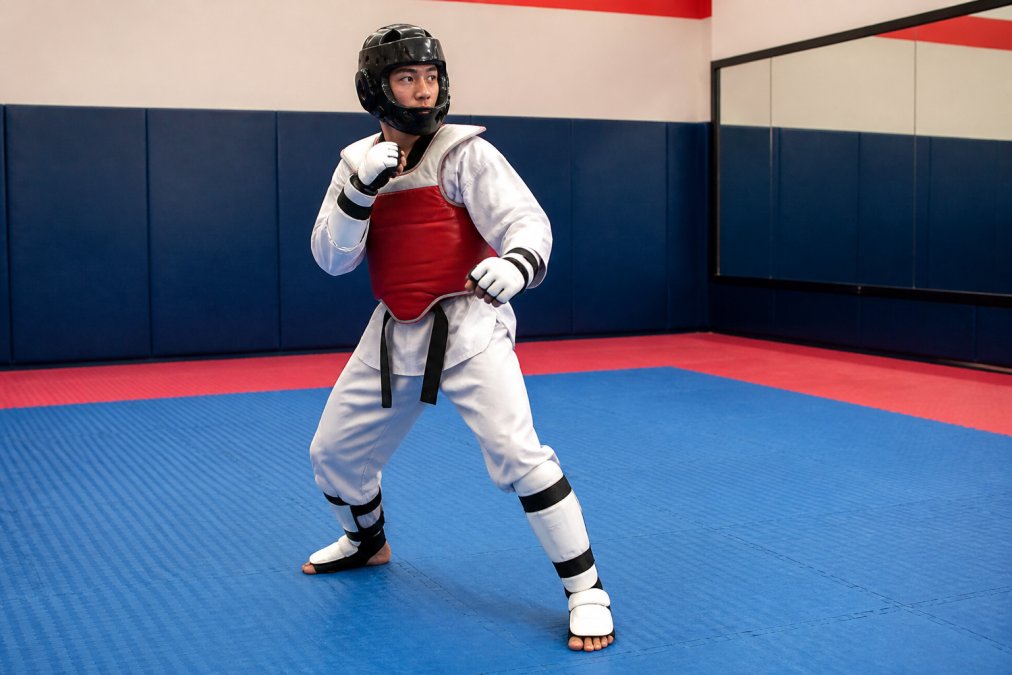
Chest Protectors, Headgear, and More
The chest protector is the most distinctive piece of taekwondo sparring gear. World Taekwondo style protectors use a full-color striking zone on the torso, with padding that extends over the collarbone and shoulders. Look for adjustable hook-and-loop closures that create a snug fit without restricting breathing or torso rotation.
Headgear for taekwondo typically covers the crown, temples, and ears, with dense foam padding to absorb kicks and accidental head contact. Gloves protect your hands and knuckles while leaving fingers free for grabbing techniques. Shin guards extend down over the instep, protecting both surfaces during checking and kicking exchanges.
Best Taekwondo Sparring Gear Sets for Every Level
A complete set saves money and guarantees a cohesive look, but the right set for a 10-year-old beginner is very different from the right set for a 25-year-old national competitor. Buying based on skill level and training frequency prevents overspending on features you don't need and under-buying on protection you do.
Beginner and Junior Athletes (Ages 6-14)
For younger or newer students, the priority is reliable protection, easy adjustability, and affordability. They are still learning how to control their strikes, so gear needs to be forgiving. Look for sets with:
- Dipped Foam Construction: This is the most common and cost-effective type. It's lightweight, easy to clean, and provides adequate protection for controlled, point-style sparring.
- Extensive Adjustability: Kids grow, so look for hook-and-loop closures with a wide range of adjustment on headgear, shin guards, and chest protectors.
- Full Face Protection: For juniors, consider a headguard with a face shield. It protects the face from accidental high kicks and builds confidence in new sparring partners.
The ProForce Lightning 5-Piece Set is an excellent starting point for this group. Its vinyl-dipped foam is forgiving, and the included mouthpiece is a bonus. However, the headgear fits tight, so measure carefully and consider ordering a size up.
Intermediate and Club-Level Athletes (Ages 15+)
As athletes move into more frequent, full-contact sparring, they need gear that offers better impact absorption and a more secure fit. This is the level where you should start paying attention to padding density and shell durability.
- Multi-Layer Foam: Look for gear that specifies multi-density or layered foam. This provides better shock dispersion than a single layer of uniform foam.
- Secure Closures: At this level, gear shifting mid-round is unacceptable. Look for wide, reinforced hook-and-loop straps.
- Ventilation: As training intensity increases, so does heat. Prioritize gear with mesh panels or air holes.
The Century 7-Piece Set fits this category well. It adds shin guards and a mouthguard to the core pieces, ensuring you have everything needed for full-contact sparring. The dipped foam construction is a step up in durability from the most basic options.

Elite and Competitive Athletes
Elite competitors training for national or international events should not be buying pre-packaged sets. At this level, gear is a personal tool, and athletes typically build their kit piece-by-piece to meet World Taekwondo (WT) specifications and personal preferences.
- WT Approved Gear: For any athlete aiming to compete in WT-sanctioned events, gear must meet specific certification standards. This is non-negotiable.
- Specialized Fit: Elite athletes often have gear custom-fitted or adjusted to their body. A chest protector that is a few millimeters off can be the difference between a point scored and a point lost.
- Material Quality: Look for high-grade synthetic leather or polyurethane shells over high-density, closed-cell foam. This combination offers the best durability and impact resistance.
For this group, buying individual pieces like the ProForce II TKD Glove and ProForce II TKD Shin/Instep Guard is the standard approach. It allows for replacing worn items with upgraded versions and ensures every piece meets competition specifications.

The Cost-Per-Session Calculation
Instead of just looking at the price tag, consider the cost per training session. A $100 set that lasts for 200 sessions costs $0.50 per session. A $60 set that breaks down after 50 sessions costs $1.20 per session and leaves you unprotected sooner. Higher-quality gear is almost always the more economical choice for anyone training consistently.
Individual Gear: Gloves, Guards, and Headgear
Not everyone needs a full set. Experienced competitors often replace individual pieces as gear wears out, and some schools allow students to mix and match colors. Buying individual pieces also lets you upgrade one area at a time.
ProForce II TKD Gloves and Guards
The ProForce II TKD Glove at $39.99 uses an open-palm design with finger loops, giving you grip and hand mobility while protecting the knuckles and back of the hand. The elastic wrist strap with hook-and-loop closure keeps the glove secure.
For leg protection, the ProForce II TKD Shin/Instep Guard at $39.99 covers the full lower leg and top of the foot. The ProForce II TKD Forearm Guard at $34.99 rounds out the set, blocking blocks and checks during close-range exchanges. All three pieces feature dense foam padding with a durable vinyl exterior.
For head protection, the ProForce Thunder Full Headguard with Shield at $84.99 adds a clear polycarbonate face shield, ideal for younger students or anyone who wants extra facial protection during sparring drills. This model also fits tight, so order a size up.
How to Size Taekwondo Chest Protector for a Secure Fit
A properly fitted chest protector should cover your entire torso from the collarbone down to the floating ribs, with the side padding wrapping around toward your back. Measure your chest circumference at its widest point, just under the armpits, and compare it against the manufacturer's sizing chart. Most brands offer child, youth, and adult sizes with overlapping ranges.
The protector should feel snug but not restrictive. You should be able to breathe deeply and rotate your torso freely. Adjustable side ties or hook-and-loop closures let you fine-tune the fit, and the protector should stay in place when you raise both arms overhead. If it slides or shifts during movement, size down or tighten the closures.
Why Choose WT Approved Sparring Gear?
World Taekwondo approved gear meets the official specifications used in Olympic-style competition, which makes it the safest bet for anyone who may compete. WT approved chest protectors use the full-color trunk protector system with electronic scoring sensors in competition, and they follow standardized specifications for padding density and coverage area.
USA Taekwondo's official equipment rules outline which gear is mandatory for sanctioned events, and they align closely with WT standards. Even if you train purely for recreation, WT approved gear guarantees a baseline level of protection that many schools adopt as their minimum requirement.
For point sparring in karate or other disciplines, check with your instructor about which sparring gear regulations apply. Many schools accept WT style gear, but some organizations have their own specifications for padding thickness and coverage.
Taekwondo Sparring Gear Maintenance Tips for Longevity
Most gear fails not from impact but from neglect. Sweat, skin oils, and bacteria break down foam padding and vinyl shells faster than repeated kicks do. A proper maintenance routine protects your investment and, more importantly, your health. Skin infections like ringworm and staph are a real risk in any contact sport, and shared or poorly cleaned gear is a primary transmission vector.
The Five-Minute Post-Training Routine
Build this habit after every single session:
- Wipe Down: Use a clean, damp microfiber cloth to wipe the interior and exterior of every piece. Pay special attention to areas that contact skin directly, the inside of headgear, the liner of gloves, and the surface of shin guards.
- Disinfect: For a deeper clean, use a dedicated sports equipment disinfectant spray or a DIY solution of one part white vinegar to three parts water. Spray lightly and let it air dry. Avoid harsh chemicals like bleach, which can degrade the vinyl and foam. According to CDC guidance on cleaning athletic equipment, regular disinfection of high-contact sports equipment is critical for reducing the spread of skin infections.
- Air Out: Never store gear damp. Leave it unzipped and open in a well-ventilated area, not sealed inside your gear bag. Trapped moisture is the #1 cause of odor and bacterial growth.
- Deodorize: For persistent odor, sprinkle a small amount of baking soda inside gloves and headgear overnight, then shake it out the next morning. This neutralizes acids and absorbs moisture without damaging materials.
The Deep-Clean Protocol (Monthly)
Once a month, give your gear a more thorough cleaning. Fill a sink or basin with cool water and a small amount of mild soap (like a drop of dish soap). Use a soft cloth or sponge to gently scrub the exterior shells and interior liners. Rinse with a clean, damp cloth and allow everything to air dry completely, away from direct sunlight or heat sources, which can warp the shell.
When to Replace Gear
Cleaning extends lifespan, but it doesn't make gear immortal. Regularly inspect your gear for these signs of failure:
- Foam Compression: If you press on the padding and it doesn't spring back, or if it feels noticeably thinner, the impact absorption is compromised.
- Cracked or Peeling Shell: A cracked vinyl shell exposes the foam to sweat and allows it to break down faster. It also means the structural integrity is gone.
- Frayed or Stretched Straps: If hook-and-loop closures no longer hold securely, the gear will shift during sparring, creating a safety hazard.
- Persistent Odor: If a thorough deep clean doesn't eliminate the smell, bacteria have likely penetrated the foam. It's time for a replacement.
For athletes who train multiple times a week, consider rotating between two sets of gloves and shin guards. This allows each set to fully air out and dry between sessions, significantly slowing material breakdown and bacterial growth. This simple practice is one of the most effective ways to make high-quality gear last for years, not months.
Frequently Asked Questions
What is the best brand of Taekwondo sparring gear?
The best brand depends on your needs, but ProForce and Century are two of the most trusted names. ProForce gear, like the Ultra Reversible TKD Chest Guard, is known for meeting WT competition standards. Century sets are praised for their durable dipped foam construction. Both offer excellent protection and durability for training and tournaments. For most practitioners, choosing gear from either of these brands ensures you are getting reliable, high quality taekwondo sparring gear.
What pieces of equipment are included in a full Taekwondo sparring kit?
A full taekwondo sparring kit typically includes a chest protector (hogu), headgear, gloves, shin guards, instep guards, forearm guards, and a mouth guard. A groin guard is also essential for male practitioners. You can buy these pieces individually, or save money with a complete set. For example, the Century 7-Piece Sparring Gear Combo Set bundles headgear, gloves, boots, shin guards, and a mouthguard. The ProForce Lightning 5-Piece Set is another popular option that includes a free mouthpiece.
How do I know if my sparring gear is high quality?
High quality sparring gear uses dense, shock-absorbing foam padding, not thin or flimsy material. Look for durable construction with reinforced stitching and secure hook-and-loop closures. For competition, check that the gear is WT approved, which means it meets specific safety and performance standards. The outer shell should be smooth, durable vinyl or synthetic leather that is easy to clean. Quality gear will also have a secure, comfortable fit that does not shift during movement.
How much does a full Taekwondo sparring kit cost?
A full taekwondo sparring kit can cost anywhere from $100 to $200 for a quality set. At BlackBeltShop, complete sets offer the best value. The ProForce Lightning 5-Piece Set is $105.99 and includes headgear, hand guards, boots, and a free mouthpiece. For more complete protection, the Century 7-Piece Set is $134.99 and adds shin guards. Buying a set is usually more affordable than purchasing each piece of taekwondo sparring gear separately.
What is the best sparring gear for competition?
For WT-style competition, you need gear that is officially approved. This means items like a WT approved chest protector with the correct colored scoring zones. The ProForce Ultra Reversible TKD Chest Guard is an excellent choice, featuring a reversible red and blue design for tournament use. Your gloves, shin guards, and headgear should also meet WT specifications. Always check with your tournament organizer or coach to confirm the specific regulations for taekwondo sparring gear before you compete.