

Table of Contents
- How to Measure Your Waist for a Belt
- Understanding Belt Size vs. Pant Size
- Martial Arts Belt Sizing Guide
- Sizing for Different Rise Heights
- Tips for a Perfect Fit
- Common Sizing Mistakes to Avoid
- Troubleshooting: What to Do If You're Between Sizes
- Frequently Asked Questions
Last Updated: August 31, 2026
How to Measure Your Waist for a Belt
Getting the right belt size starts with an accurate waist measurement. The key is measuring at your natural waistline, the narrowest part of your torso, typically where your body naturally bends when you lean sideways. This is where a belt will actually sit when you wear it.
The Tape Measure Method
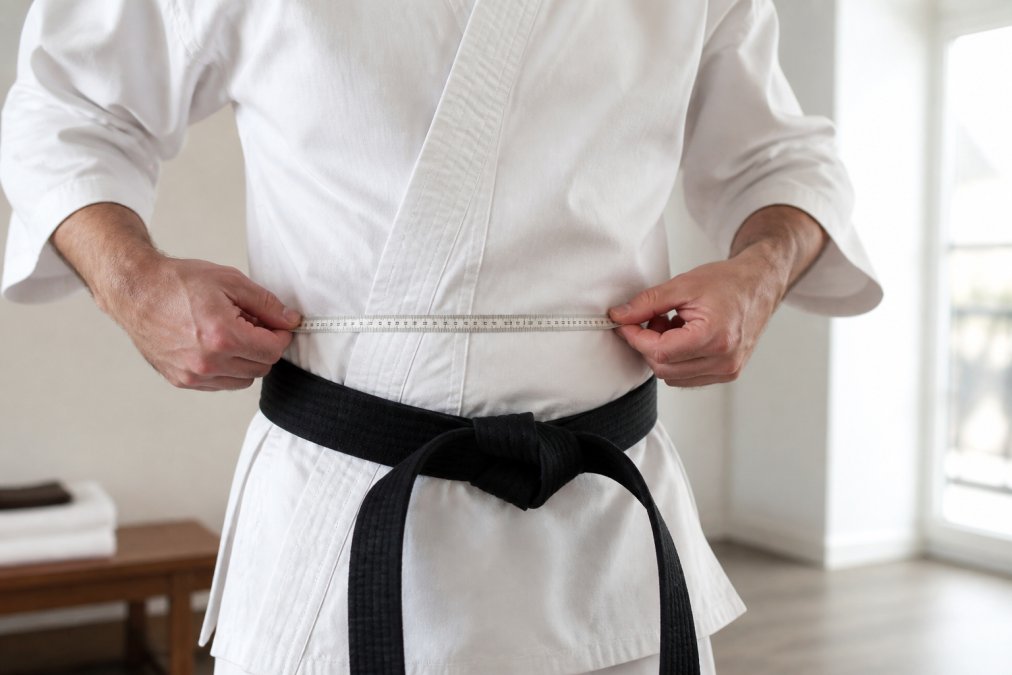
The most reliable way to determine your belt size is with a flexible tape measure. Wrap the tape around your waist at your natural waistline, keeping it snug but not tight. The tape should lie flat against your skin without digging in or sagging. Take the measurement in inches, which is the standard for belt sizing in the United States. If you measure 34 inches, you'd order a size 34 belt. However, some manufacturers add an inch or two to their stated size to account for the buckle and fastening mechanism, so always check the product description before ordering.
For martial arts belts specifically, the measurement is based on the length of the belt when wrapped around your body with a standard knot and a few inches of overlap. At BlackBeltShop, our team recommends measuring from your hip bone around to where the belt will tie, then adding 4-6 inches for the knot and overlap.
Measuring an Existing Belt
If you already own a belt that fits well, lay it flat on a table and measure from the center hole (the hole you normally use) to the end of the belt tongue. This measurement tells you the total length of the belt. Compare this to the belt size chart of the brand you're ordering from. For martial arts belts, measure the full length from one end to the other. Most martial arts belts range from 240 to 330 centimeters (about 94 to 130 inches) in total length, depending on the wearer's size and style.
Understanding Belt Size vs. Pant Size
One of the biggest sources of confusion is assuming your belt size matches your pant size. It doesn't. Pant sizing is based on waist measurement but is also influenced by inseam, fit, and the brand's own sizing standards. A size 34 pant might have a 34-inch waist, but the actual waistband measurement can vary by 1-2 inches depending on the cut and manufacturer.
A belt size, by contrast, is a direct measurement of the waist. Your belt size should match your actual waist measurement in inches. If you measure 36 inches around your natural waistline, you need a size 36 belt. A belt that's too small will be uncomfortable and hard to fasten properly. A belt that's too large will bunch up, slip, or fail to hold your pants in place.
Martial Arts Belt Sizing Guide
Martial arts belts operate on a different sizing system than everyday belts. The sizing is based on the total length of the belt and the width of the belt, not your waist measurement alone.
Width Considerations for Karate and Martial Arts
Martial arts belts come in different widths: 1.5 inches, 1.75 inches, and 2 inches. A 1.5-inch belt is traditional and works well for most practitioners. A 2-inch belt, like the ProForce IV 2 inch Double Wrap Black Karate Belt available at BlackBeltShop, offers a more substantial feel and is often preferred by advanced practitioners or those with larger frames.

Smaller practitioners, especially children, typically wear 1.5-inch belts. The ProForce II 1.5 inch Double Wrap Solid Karate Belts are ideal for younger students or those new to training. Larger practitioners or those seeking a more traditional appearance often prefer the wider 2-inch option. A wider belt distributes pressure more evenly across your abdomen and provides better support during training. A narrower belt is lighter and allows for more mobility.
Impact of Belt Thickness and Leather Stretch
Most people overlook belt thickness when sizing, but it matters. A thicker belt takes up more space when wrapped and tied. If you're between sizes, a thick belt might push you into the next size up. A thinner, more flexible belt might allow you to stay in your current size.
Leather stretch is another factor that affects fit over time. A brand new leather belt is stiff and won't stretch much. As you wear it and train in it, the leather gradually softens and becomes more pliable. Quality leather stretches gradually and predictably. Lower-quality belts may stretch unevenly or excessively, leading to poor fit after a few months.
When choosing a martial arts belt size, account for this stretch. If you're at the edge of a size, choose the smaller size knowing the leather will soften. If you prefer a looser fit immediately, go up a size.
Sizing for Different Rise Heights
Pant rise, the distance from the crotch seam to the top of the waistband, affects how high your belt sits and what size belt you need. Low-rise pants sit below your natural waistline, typically 2-3 inches lower. If you wear low-rise pants, your belt will sit lower on your body, which means you might need a slightly larger size to account for the extra circumference at that lower point. High-rise pants sit at or above your natural waistline, meaning your belt will sit at your narrowest point.
Mid-rise pants, which are the most common, sit right at your natural waistline. This is where most belt sizing charts are calibrated. The practical takeaway: measure yourself wearing the type of pants you'll be wearing the belt with to ensure your belt size matches how you'll actually wear it.
Tips for a Perfect Fit
A properly fitting belt should feel snug but not restrictive. You should be able to fit one finger comfortably between the belt and your body. The belt should not dig into your skin or leave marks, and it should not slip or rotate around your waist as you move.
When you fasten your belt, you should use the center hole or a hole very close to center. If you're using a hole near the end of the belt, the belt is too large. If you can't find a hole that fits comfortably, the belt is too small. Most belts have holes spaced about half an inch apart, giving you some flexibility if you're between sizes.
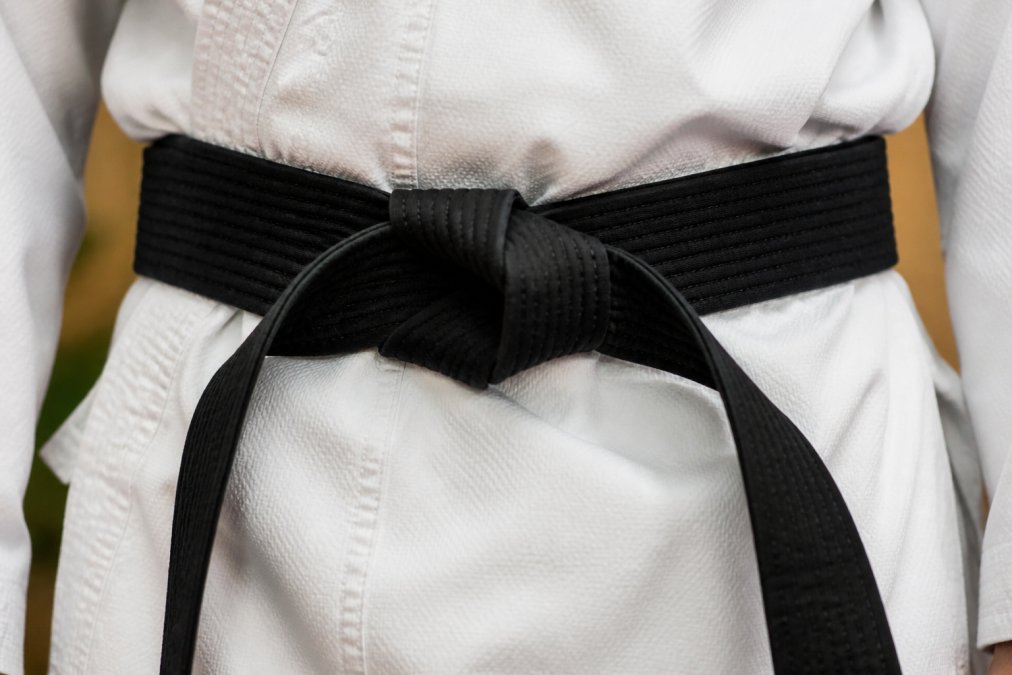
For martial arts belts, proper fit is about function. A belt that's too loose will shift during kicks and punches, throwing off your balance. A belt that's too tight will restrict your breathing and movement. When trying on a new belt, move around and practice some basic kicks or punches if possible. The belt should stay in place without any adjustment.
Common Sizing Mistakes to Avoid
The biggest mistake people make is measuring the wrong part of their body. Measuring at your hip bone, your lowest rib, or anywhere other than your natural waistline will give you an inaccurate size. Another common error is comparing your belt size to your pant size and assuming they should match. Your actual waist measurement is what matters for belt sizing, not the label on your pants.
People also frequently underestimate the impact of belt width and thickness. A 2-inch belt wraps differently than a 1.5-inch belt. A thick, rigid belt behaves differently than a thin, flexible one. Many practitioners also fail to account for leather stretch when ordering, buying a belt that feels perfect out of the box without realizing it will stretch and become looser over time. Finally, avoid the temptation to order based on what you think you should wear rather than what your actual measurement says. If you measure 35 inches, order a size 35 belt.
Troubleshooting: What to Do If You're Between Sizes
If your measurement falls between two standard sizes, you have a few options. The first is to round to the nearest whole number. Round down if you prefer a snug fit and expect the leather to stretch. Round up if you prefer a looser fit or want extra room for layering.
The second option is to look for belts that offer half-size options. Some manufacturers, particularly those offering premium or custom belts, provide belts in half-inch increments. BlackBeltShop offers custom embroidered martial arts black belts tailored to your rank and style, allowing you to choose custom kanji, names, or academy logos with high-density stitching built to last a lifetime of training.
If you order a belt and it doesn't fit as expected, quality retailers stand behind their products. Most reputable martial arts suppliers offer straightforward return policies for items that don't fit. Don't hesitate to reach out if your belt arrives and the fit isn't right, a quick exchange is often the fastest solution.
Choosing the right belt size might seem straightforward, but the details matter. An ill-fitting belt affects your comfort, your training performance, and how long the belt lasts. By measuring accurately, understanding the difference between belt size and pant size, and accounting for factors like width, thickness, and leather stretch, you'll find a belt that fits perfectly and serves you well through years of training.
At BlackBeltShop, we help practitioners find gear that matches their needs and training style. We offer martial arts supplies, including uniforms (gis), karate supplies, and sparring gear across various disciplines, with items available at 10-40% below regular retail. Whether you're looking for a traditional karate belt or specialized sparring equipment, our team understands what quality looks like and can guide you toward the right choice.
Frequently Asked Questions
Q: What size belt should I get for a 32-inch waist?
A: For a 32-inch waist, choose a belt size of 34 inches. This standard sizing rule adds 2 inches to your waist measurement to account for the overlap and fastening of the buckle. The belt should wrap around your waist with the center hole aligning with your body when fastened. Always verify by measuring your existing belt or trying the tape measure method before ordering.
Q: How do belt size and pant size differ?
A: Belt size and pant size are not interchangeable. Pant size refers to the waistband measurement, while belt size accounts for the overlap needed for fastening. A 32-inch pant size typically requires a 34-inch belt. The difference exists because belts must extend beyond your waist to thread through loops and fasten at the buckle, making the belt size approximately 2 inches larger than your actual waist.
Q: How much extra length should a martial arts belt have after tying?
A: A properly sized martial arts belt should have 4 to 6 inches of extra length extending past the center hole after tying. This length allows the belt to hang neatly and provides flexibility for slight weight changes. The tip of the belt should reach your mid-thigh or slightly below when tied. If your belt is too short, you won't have enough material to tie properly; if too long, it will drag or look untidy in the dojo.
Q: Does belt sizing differ between casual wear and martial arts uniforms?
A: Yes, belt sizing can differ based on your clothing type. Martial arts belts worn with gis may fit differently than belts worn with regular pants due to the thickness of the gi fabric and how it sits on your waist. Additionally, martial arts belts come in various widths (1.5 inches, 1.75 inches, 2 inches), which affects how they fit and feel. Always measure your waist at the point where you'll wear the belt to ensure accurate sizing for your specific use.
This article was written using GrandRanker