

Table of Contents
- Why Shin Guards Hold Odor and What You're Actually Fighting
- A DIY Gear Disinfectant Recipe That Won't Destroy Your Gear
- Step-by-Step: How to Clean Smelly Shin Guards Effectively
- How to Dry Shin Guards Quickly Without Damaging Padding
- How to Prevent Martial Arts Gear Odors Before They Start
- Common Mistakes That Keep Your Shin Guards Smelling Bad
- Conclusion: Build the After-Class Habit
- Frequently Asked Questions
Last Updated: October 8, 2026
Why Shin Guards Hold Odor and What You're Actually Fighting
Shin guards trap sweat, skin cells, and bacteria in foam padding that never fully dries between sessions. That combination is what produces the smell, and it builds up faster than most athletes expect.

Closed-cell foam, fabric linings, and vinyl shells all hold moisture differently. A vinyl exterior wipes clean in seconds. The foam underneath can stay damp for a full day, and that damp interior is where odor-producing bacteria multiply.
Deodorizing vs. Cleaning vs. Sanitizing vs. Disinfecting
These four words get used interchangeably, and that's a mistake worth correcting.
- Deodorizing masks or neutralizes smell. It does not remove the bacteria causing it.
- Cleaning removes visible dirt, sweat residue, and surface grime with soap and water.
- Sanitizing reduces bacteria on a surface to a level considered safe by public health standards.
- Disinfecting kills or inactivates most pathogens on a surface, but only when the product stays wet for the full contact time listed on its label.
Most smelly shin guard problems need cleaning first, then sanitizing. Disinfecting matters more when gear is shared or someone on the mat is sick.
A DIY Gear Disinfectant Recipe That Won't Destroy Your Gear
A simple homemade cleaning solution for training gear starts with one part white vinegar to three parts water in a spray bottle.
That's the whole recipe. No bleach, no harsh solvents, no mystery ingredients.
Vinegar handles light odor and surface grime well. Tea tree oil and lemon oil both have known antimicrobial properties and leave a cleaner scent than vinegar alone.
Recipe Proportions, Storage, and Ingredient Incompatibilities
Keep these rules in mind:
- Never mix vinegar and hydrogen peroxide in the same bottle. Combined in one container, they form peracetic acid, which irritates skin and lungs.
- Never mix vinegar with bleach. This produces chlorine gas. It is genuinely dangerous.
- Store your spray in a cool, dark spot. Vinegar solutions lose potency over time, so mix small batches.
- Label the bottle. An unlabeled spray bottle in a gear bag is an accident waiting to happen.
Rubbing alcohol at 70% strength is another option for wiping down non-porous surfaces. It evaporates fast and needs no rinsing, but it can dry out leather over time.
Step-by-Step: How to Clean Smelly Shin Guards Effectively
Here is the routine we recommend to anyone learning how to clean smelly shin guards effectively. It takes about five minutes per pair, and the order matters: you clean first, then sanitize, then dry.
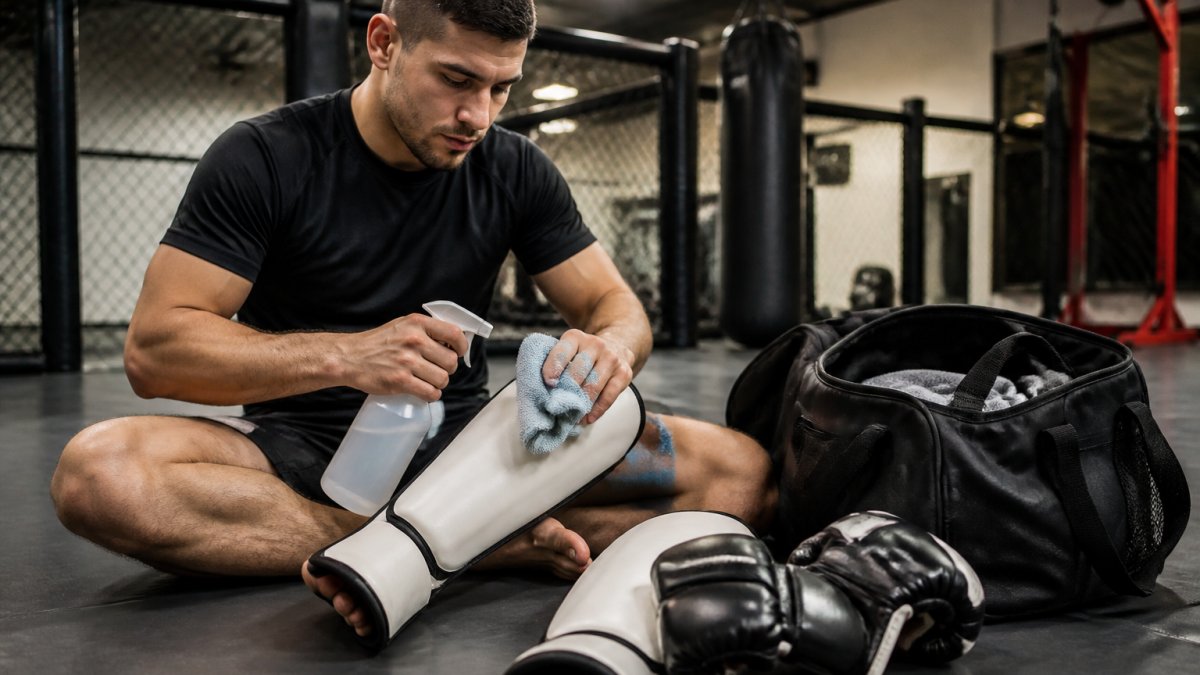
- Wipe the exterior first. Use a damp microfiber cloth to remove surface sweat and grime from the vinyl or synthetic leather shell. Cleaning removes the sweat residue and skin cells that feed odor bacteria; a spray alone won't do this.
- Spray the inside and outside. Apply your DIY solution or a diluted vinegar mix. Don't soak the padding, oversaturation pushes moisture deeper into foam that already dries slowly.
- Let it sit for the full wet contact time. This is the step most people rush. A vinegar-and-water mix needs a few minutes of visible wet contact to do meaningful work. If you're using a store-bought sanitizer or disinfectant, follow the contact time printed on its label, that number is product-specific and a homemade mix has no equivalent validated figure.
- Wipe again with a clean, damp cloth. This removes loosened residue rather than leaving it to dry on the surface.
- Check the straps and closures. Hook-and-loop closures collect lint and sweat and are the most-skipped part of any pair of shin guards.
- Air dry completely before storing. Damp gear stored closed is the single biggest driver of recurring odor.
- Repeat after every class. Once a week is not enough for gear you sweat in daily.
Match the Method to the Material
Not all shin guards tolerate the same treatment, and using the wrong method is how gear gets ruined.
- Vinyl and synthetic leather: The easiest to maintain. Wipe down, spray, air dry. These shells are non-porous, so surface cleaning actually reaches the problem.
- Full-grain leather: Wipe with a barely damp cloth and condition occasionally. Never soak leather or leave it wet, moisture cracks and stiffens it over time. Alcohol-based wipes can dry leather out, so use them sparingly if at all.
- Foam padding: The interior is the hard part. Foam holds moisture, so airflow matters more than any spray. Never submerge padded gear in water; it won't dry out and can break down the foam.
- Fabric linings: Spot clean with a mild soap solution. Machine washing breaks down foam and stitching over time.
Protect Your Skin and Your Breathing While You Clean
A few practical safety habits keep the routine from causing new problems:
- Work in a ventilated space. Spraying vinegar or alcohol in a closed locker room concentrates fumes. Open a window or step outside.
- Don't oversaturate. A light, even mist is enough. Soaking the padding leaves it damp longer and can leave residue against your skin.
- Rinse residue off skin-contact surfaces. If you use essential oils or a stronger mix, wipe the interior with a clean damp cloth afterward so residue doesn't sit against your shins during training.
- Patch-test new solutions. If you or a training partner has sensitive skin, test a small area first. Tea tree oil in particular can irritate.
How to Dry Shin Guards Quickly Without Damaging Padding
Fast drying comes down to airflow, not heat. Heat breaks down foam and can warp vinyl or crack leather.
Here's what works:
- Stuff the guards with dry towels to pull moisture from the interior.
- Hang them open, not folded, so air moves through both sides.
- Point a fan at them for 30 to 60 minutes. This cuts drying time more than anything else.
- Skip the dryer and direct sunlight. Both degrade padding and shells.
If you train twice a day, a small portable fan in your gym bag is worth the space. Damp gear stored overnight is the single biggest cause of recurring odor.
Macho Dyna Karate martial Arts Shin Guards →
How to Prevent Martial Arts Gear Odors Before They Start
Prevention is simpler than most people think, and it starts the moment you finish training. The goal is to remove moisture and food sources for bacteria before they get a chance to settle in.
The Five-Minute After-Class Routine
This is the routine we recommend for any enclosed gear, shin guards, gloves, headgear, chest protectors. It takes about five minutes and covers the whole chain from sweat to storage.
- Air it out immediately. As soon as you're off the mat, open every strap and flap so air reaches the interior. Don't zip it into a bag first.
- Wipe the exterior. A quick pass with a damp microfiber cloth removes surface sweat before it dries into residue.
- Mist the interior lightly. A diluted vinegar spray or your DIY solution. Don't soak, you want a light, even coat, not a wet interior.
- Let it sit for the full wet contact time. A few minutes for a vinegar mix; follow the label for any store-bought product.
- Wipe the interior with a clean, damp cloth to remove loosened residue, especially on skin-contact surfaces.
- Dry completely with airflow. Stuff with a dry towel, hang open, and point a fan at it for 30 to 60 minutes if you can. Heat is the enemy here, skip the dryer and direct sunlight.
- Store open, not sealed. A mesh gear bag or an open shelf beats a closed duffel every time.
Know What Each Step Actually Does
It helps to be honest about what a homemade spray can and can't do:
- Deodorizing masks or neutralizes smell. It does not remove the bacteria causing it.
- Cleaning removes visible dirt, sweat residue, and surface grime with soap and water.
- Sanitizing reduces bacteria on a surface to a level considered safe by public health standards.
- Disinfecting kills or inactivates most pathogens, but only when the product stays wet for the full contact time listed on its label.
A DIY vinegar spray is best thought of as a light cleaner and deodorizer. It is not a validated disinfectant, and no homemade mix has been tested against specific pathogens the way a labeled product has. If gear is shared or someone on the mat is sick, use a product with a label contact time.
Habits That Keep Odor From Coming Back
- Spray after class, every class. A quick mist takes 20 seconds and stops bacteria from settling in.
- Never leave gear in a closed bag. This is the number one mistake we see. Damp gear in a sealed bag is a petri dish.
- Rotate two pairs if you train daily. One dries while you wear the other.
- Wash your gym bag. Odor transfers from the bag back onto clean gear.
The same habits apply to gloves, shin guards, and any enclosed gear. If it holds sweat, it needs airflow.
Common Mistakes That Keep Your Shin Guards Smelling Bad
The biggest mistake is spraying deodorizer and calling it cleaning. Odor returns because the bacteria were never removed.
Other repeat offenders:
- Machine washing padded gear. It seems efficient. It also breaks down foam and stitching.
- Using bleach on colored gear. It fades fabric and weakens materials.
- Storing gear in a hot car. Heat plus moisture equals fast bacterial growth.
- Ignoring the straps. They hold sweat and get skipped during cleaning.
- Only cleaning when the smell is obvious. By then, bacteria have already colonized the foam.
If your gear smells after a proper cleaning routine, the padding likely needs replacement. Foam that has absorbed years of sweat won't come back.
Conclusion: Build the After-Class Habit
The real fix for smelly shin guards isn't a stronger spray. It's a consistent five-minute routine after every class: wipe, spray, air dry, store open.
When it's time to replace worn gear, BlackBeltShop carries shin guards built for daily training, from the lightweight Macho Dyna Karate Shin Guards with their vented design to the full-grain leather Creed Shin Instep Guards.

Check out our full sparring gear lineup and build the after-class habit that keeps your equipment fresh for years.
Frequently Asked Questions
What is the best homemade disinfectant spray for shin guards?
A simple mix of 1 cup water, 1 cup white vinegar, and a few drops of tea tree oil in a spray bottle works well for most vinyl and synthetic shin guards. Vinegar handles surface bacteria and odor; tea tree oil adds mild antimicrobial action. Spray the exterior and padding, wipe with a microfiber cloth, and let it air dry fully before storing. Skip vinegar on full-grain leather, since the acid can dry out and crack the surface over time.
Can you put shin guards in the washing machine?
No. Machine washing breaks down foam padding, warps vinyl shells, and destroys hook-and-loop closures. Hand wash with a damp cloth and mild soap instead. For heavily soiled guards, spot clean with a diluted vinegar solution, rinse the cloth, and wipe again. The Macho Dyna Karate Shin Guards and similar models list wipe-down care for a reason: it preserves the foam and keeps the straps gripping properly through regular training.
How often should you clean your martial arts protective gear?
Wipe down shin guards, gloves, and headgear after every class. Do a deeper clean with a disinfectant solution once a week if you train three or more times. Enclosed gear like boxing gloves and shin-instep guards trap sweat and need the most attention. If you notice a smell that lingers after wiping, that's your cue to deep clean immediately rather than waiting for the weekly session.
Are there natural ways to remove odors from synthetic padding?
Yes. Baking soda absorbs odor from foam padding: sprinkle it inside the guard, let it sit overnight, then vacuum or brush it out. White vinegar diluted with equal parts water neutralizes odor-producing bacteria on vinyl and synthetic leather surfaces. Tea tree oil and lemon oil add mild antibacterial action. Always air dry completely after any treatment, since trapped moisture is what lets odor return within a day or two.