

Table of Contents
- Understanding Gi Material and Shrinkage
- Gi Fabric Types and Shrinkage Rates
- Step-by-Step Guide to Shrinking a Gi
- The Role of Water Temperature in Shrinkage
- Using a Dryer vs. Air Drying
- How to Prevent Gi Shrinkage
- Risks of Over-Shrinking and How to Reverse Shrinkage
- How to Measure for Martial Arts Gi
- Frequently Asked Questions
Last Updated: September 17, 2026
Understanding Gi Material and Shrinkage
Cotton gis shrink. It's not a defect, it's physics. Cotton fibers contract when exposed to heat and moisture, which is why understanding how to shrink gi properly and your gi's material composition is the first step to controlling shrinkage instead of being blindsided by it.
Most martial artists don't think about fabric weave until their gi no longer fits. By then, it's too late. The good news: knowing what you're working with means you can make informed decisions about water temperature, drying method, and whether your gi is even worth the risk of intentional shrinkage in the first place.
The difference between a gi that shrinks perfectly and one that becomes unwearable often comes down to understanding what type of cotton you own and how that specific weave behaves under heat.
Gi Fabric Types and Shrinkage Rates
Not all cotton gis shrink the same way. The weave type determines how much your gi will contract, how quickly it shrinks, and whether the shrinkage is reversible.
Pearl Weave Cotton
Pearl weave is a lightweight, traditional cotton construction that balances durability with breathability. It's the go-to for competition and everyday training because it moves with your body without excessive weight.
Pearl weave gis typically shrink when washed and dried properly. This is moderate shrinkage, noticeable but manageable if you account for it. The pearl weave structure means fibers are tightly interlocked, so shrinkage happens gradually across multiple washes rather than all at once.
The American Society for Testing and Materials provides standards for textile shrinkage testing, and pearl weave cotton typically falls into the low-to-moderate range when pre-shrunk. Pre-shrunk gis have already undergone controlled shrinkage at the factory, so what you buy is closer to final size.
BlackBeltShop's 13 OZ Pearl Weave Jiu Jitsu Sets are pre-shrunk and designed for minimal additional shrinkage if washed correctly. The 13 oz weight keeps the fabric light enough for competition while maintaining the durability you need for daily training.

Brushed Cotton
Brushed cotton undergoes a mechanical process that softens the surface fibers, creating that plush feel against the skin. This brushing process actually affects how the fabric shrinks, the loosened surface fibers can contract differently than the base weave.
Brushed cotton gis typically shrink when exposed to heat and moisture. The shrinkage is more pronounced than pearl weave because the brushing process opens up the fiber structure slightly. However, brushed cotton often feels better during training, especially for practitioners with sensitive skin who find standard gis too rough.
The trade-off is real: you get comfort, but you sacrifice some predictability in shrinkage. Brushed gis need more careful handling to avoid excessive shrinkage, but they're worth it if comfort matters to your training consistency.
BlackBeltShop carries 12 OZ Heavyweight Brushed Cotton Uniforms that are pre-shrunk. The heavyweight construction (12 oz) provides durability, while the brushed interior keeps irritation down during intense sessions. The pre-shrunk treatment means most of the shrinkage has already happened at the factory.

Step-by-Step Guide to Shrinking a Gi
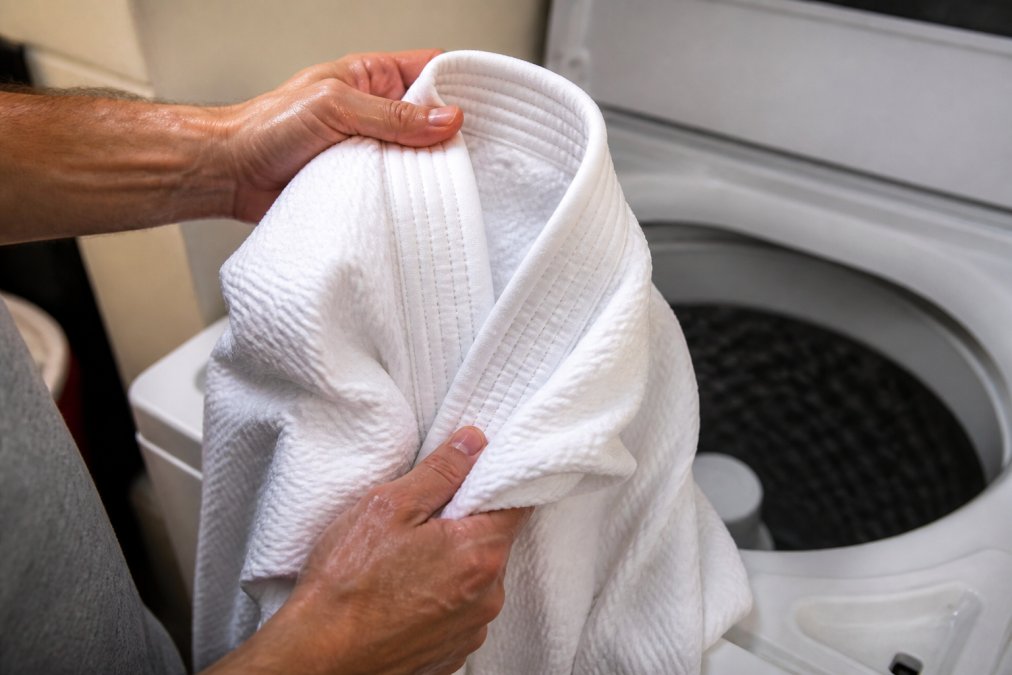
Learning how to shrink gi properly requires precision. You're not just throwing it in the wash and hoping for the best, you're controlling variables to achieve a specific fit. Here's exactly how to do it.
Step 1: Prepare Your Gi
Start with a clean gi. Dirt and sweat residue can interfere with even shrinkage and leave stains set into the fabric. Wash it once in cold water with mild detergent, then dry it completely before starting the shrinkage process.
Check the care label. Pre-shrunk gis have already undergone controlled shrinkage, so intentional shrinking is optional. Non-pre-shrunk gis will shrink more aggressively, so you have more control, but also more risk.
Inspect the seams and stitching. If your gi has weak seams or loose threads, heat will stress those areas first. A gi with reinforced stitching will hold together better during the shrinkage process.
Step 2: Choose Your Water Temperature
Water temperature is the primary lever for controlling shrinkage. Hot water shrinks cotton faster and more aggressively than warm or cold water.
- Cold water: Minimal shrinkage (0-2%). Use this if your gi already fits well and you're just cleaning it.
- Warm water: Moderate shrinkage (2-4%). This is the sweet spot for most martial artists who want controlled, predictable shrinkage.
- Hot water: Aggressive shrinkage (5-10%). Use this only if you're intentionally trying to size down significantly, and only with gis designed to handle it.
Start with warm water if you're unsure. You can always wash again with hotter water if the first attempt doesn't shrink enough. Reversing over-shrinkage is much harder than applying more heat.
Step 3: Run the Wash Cycle
Use a standard wash cycle, nothing delicate, nothing heavy-duty. A regular cycle provides adequate agitation without being too rough on the fabric.
Wash with mild detergent. Harsh detergents can damage the cotton fibers and make shrinkage unpredictable. Use about half the detergent you'd normally use, since less soap means less residue that could affect how the fabric shrinks.
Don't overload the machine. Your gi needs room to move around. Cramming it in with other clothes prevents even shrinkage and can cause creasing that's hard to remove.
Step 4: Select Your Drying Method
This is where most people make mistakes. Drying method determines whether shrinkage is controlled or catastrophic.
13 OZ PEARL WEAVE JIU JITSU SETS BJJ →
Machine drying (tumble dry):
- High heat: Maximum shrinkage. Fast but risky, use only for non-pre-shrunk gis you want to size down significantly.
- Medium heat: Moderate shrinkage. Better control than high heat.
- Low heat: Minimal additional shrinkage. Safest option for gis that are already close to your target size.
Air drying:
- Hang dry: No additional shrinkage after washing. The most predictable method. Lay the gi flat or hang it on a clothesline in a warm, dry area.
- Line dry in direct sunlight: Minimal additional shrinkage. Heat from the sun provides very gentle drying.
Air drying takes longer, typically 24-48 hours depending on humidity and temperature, but it's the safest way to preserve your gi's integrity.
Step 5: Check the Fit During the Process
Don't wait until the gi is completely dry to check the fit. Pull it out halfway through drying and try it on while it's still slightly damp.
Check specific points:
- Sleeves: Should end 2-3 inches above your wrist when your arms are at your sides.
- Pants length: Should end 2-3 inches above your ankle.
- Jacket fit: Should be snug but allow full range of motion. You should be able to move your arms freely without the jacket bunching up.
The Role of Water Temperature in Shrinkage
Water temperature is your primary control mechanism. Understanding how temperature affects cotton fiber contraction helps you predict outcomes instead of guessing.
Using a Dryer vs. Air Drying
The dryer is faster but riskier. Air drying is slower but safer. Your choice depends on how much control you need.
Machine dryer advantages:
- Fast: 45-60 minutes to complete dryness
- Consistent heat: Predictable shrinkage if you use the same settings each time
- Convenient: You can move on to other tasks
Machine dryer risks:
- Excessive heat can damage elastic and stitching
- High heat can cause uneven shrinkage if the gi is bunched in the drum
- Difficult to stop mid-process if shrinkage is happening too fast
Air drying advantages:
- Gentle: No heat stress on seams or elastic
- Reversible: You can stop the process anytime by moving the gi to a cooler area
- Preserves fabric integrity: Cotton lasts longer with minimal heat exposure
Air drying risks:
- Slow: 24-48 hours depending on humidity
- Humidity-dependent: Drying time varies by season and climate
- Requires space: You need room to lay out or hang a full gi
How to Prevent Gi Shrinkage
If your gi fits perfectly and you want to keep it that way, shrinkage prevention is your priority.
Risks of Over-Shrinking and How to Reverse Shrinkage
Over-shrinking is the most common mistake. A gi that's too small is useless for training, and reversing severe over-shrinkage is difficult.
Signs of over-shrinkage:
- Sleeves end above your wrist when your arms hang at your sides
- Pants are too short (ending above the ankle)
- The jacket is so tight you can't move your arms freely
- Seams are stressed or pulling
Can you reverse shrinkage?
How to stretch a gi:
How to Measure for Martial Arts Gi
Getting the right size from the start prevents the need to shrink your gi at all.
Frequently Asked Questions
How much will my gi shrink in a dryer?
Shrinkage depends on fabric type and heat settings. Pearl weave cotton typically shrinks when tumble dried on high heat, while brushed cotton may shrink with proper care. Pre-shrunk gis shrink significantly less than non-pre-shrunk versions. Use medium or low heat and check fit after each cycle to avoid excessive shrinkage that cannot be reversed.
How do I know if my gi is too big before shrinking?
Your gi should fit snugly at the shoulders and chest with 2-3 inches of sleeve extending past your wrist when arms are relaxed. Pants should reach your ankle with minimal excess fabric. If there's more than 4 inches of excess fabric anywhere, the gi is too large. Measure your height and weight against the manufacturer's sizing chart before attempting to shrink, oversized gis may not fit properly even after shrinking.
Is it safe to put a BJJ gi in the dryer?
Yes, but with caution. Tumble drying on medium or low heat is safe for Brazilian jiu jitsu gis made from pearl weave or brushed cotton. Avoid high heat, which can cause excessive shrinkage and damage fibers. Always check the care label first. Air drying is the safest method to prevent unwanted shrinkage, but dryer use on low settings works well if you need faster drying and monitor the garment closely.
Can I reverse shrinkage if I over-shrink my gi?
Partial reversal is possible but not guaranteed. Soak the shrunken gi in lukewarm water with a fabric relaxant for 20-30 minutes, then gently stretch it back to original dimensions while damp. Lay flat to dry. This works best for minor over-shrinkage (1-2 inches). Significant shrinkage is difficult to reverse completely. Prevention through careful temperature control and proper drying methods is far more effective than attempting to fix damage after the fact.