

Table of Contents
- Why Martial Arts Gear Smell Gets So Bad
- Your Post-Workout Routine: The First Line of Defense
- How to Clean Sparring Gear by Material Type
- Best Odor Eliminator for Boxing Gloves: What Actually Works
- How to Dry Boxing Gloves Quickly Without Damage
- Long-Term Storage Solutions to Prevent Martial Arts Gear Smell
- Conclusion
Last Updated: August 27, 2026
Why Martial Arts Gear Smell Gets So Bad
Martial arts gear smell is one of the most persistent problems in combat sports training. The good news: this problem is almost entirely preventable with the right protocol.
The smell itself isn't just unpleasant. It's a sign of active microbial buildup inside your gear.
Bacterial Growth and Moisture: The Real Culprits
Bacterial growth is the primary driver of odor in sparring gear, gloves, and uniforms. During a hard training session, your body produces significant sweat, and that moisture gets trapped inside the dense foam padding and synthetic leather of your equipment. Warmth plus dampness plus organic material creates an ideal environment for bacteria and fungi to multiply rapidly.
Martial arts gear is particularly vulnerable because it's designed to absorb impact with thick, porous materials that trap moisture deep inside. That moisture doesn't evaporate quickly, especially when gear is packed into a closed bag immediately after training.
Fungal prevention is just as important as addressing bacteria. Athlete's foot fungus and other fungal organisms thrive in damp, warm conditions and can cause skin infections if left unchecked.
Your Post-Workout Routine: The First Line of Defense
Most guides jump straight to cleaning products, but reactive cleaning can never fully compensate for poor post-workout habits.
Airing Out Gear Right After Training
The single most impactful thing you can do is air out your gear within minutes of finishing training. Never pack sweaty equipment directly into a closed gear bag.
A practical post-workout protocol:
- Remove gloves, shin guards, and headgear immediately after your last round
- Open gloves fully and prop them apart to allow air circulation inside
- Hang hand wraps separately rather than leaving them coiled or stuffed in gloves
- Set all gear out in a ventilated area, not on the floor of a locker room
- Allow at least 2-3 hours of air exposure before packing into a bag
A dehumidifier in your training space or gear room can significantly reduce ambient moisture and accelerate the drying process.
Preventing Bacterial Growth in Your Gear Bag
Your gear bag is often the most overlooked source of odor. A closed bag that regularly carries damp equipment becomes a bacteria incubator.
Several habits address this directly:
- Choose a bag with mesh panels or ventilation ports to allow air circulation
- Leave the bag unzipped when not in use, especially overnight
- Wipe the interior with a diluted disinfectant spray at least once per week
- Avoid storing clean gear and dirty gear together in the same compartment
How to Clean Sparring Gear by Material Type
Different materials require different approaches. Treating synthetic leather the same way you treat cotton hand wraps will damage your gear faster than the training itself.
Synthetic Leather Gear: Shin Guards and Headgear
Synthetic leather is the dominant material in modern sparring gear. It's durable and moisture-wicking on the outer surface, but it requires specific care.
Cleaning protocol for synthetic leather:
- Wipe down the exterior after every session with a damp cloth to remove surface sweat and salt deposits
- Mix a solution of equal parts water and white vinegar in a spray bottle
- Lightly mist the interior padding and wipe with a clean cloth
- Allow to air dry completely before storage, never use direct heat
- Once per month, apply a small amount of leather conditioner to the exterior surface to prevent cracking
Avoid soaking synthetic leather gear in water. Prolonged moisture exposure degrades the adhesive layers between the outer shell and interior foam.
According to guidance from the American Academy of Dermatology on skin infections from sports equipment, proper cleaning and drying of sports gear significantly reduces the risk of bacterial and fungal skin infections among athletes.
Mouthguards, Hand Wraps, and Soft Gear
Soft gear can tolerate more aggressive cleaning because it doesn't have the same structural vulnerabilities as padded equipment.
Mouthguards: Rinse immediately after every session with cold water. Use a mouthguard cleaning tablet or diluted baking soda solution weekly. Store in a ventilated case, never sealed while still damp.
Hand wraps: Machine washing is safe and recommended. The key is preventing tangling during the wash cycle. The ProForce Hand Wrap Wash Bag is a mesh laundry bag designed specifically for hand wraps, keeping them untangled and protected through the wash cycle. Air dry hand wraps after washing, as a dryer can shrink the elastic and reduce their effectiveness.

Best Odor Eliminator for Boxing Gloves: What Actually Works
Boxing gloves are the hardest piece of gear to deodorize because their thick padding traps moisture deep inside, where surface treatments can't reach.
Baking Soda, Vinegar, and DIY Odor-Catching Sachets
The most effective odor-neutralizing approach combines absorbent materials with antibacterial agents.
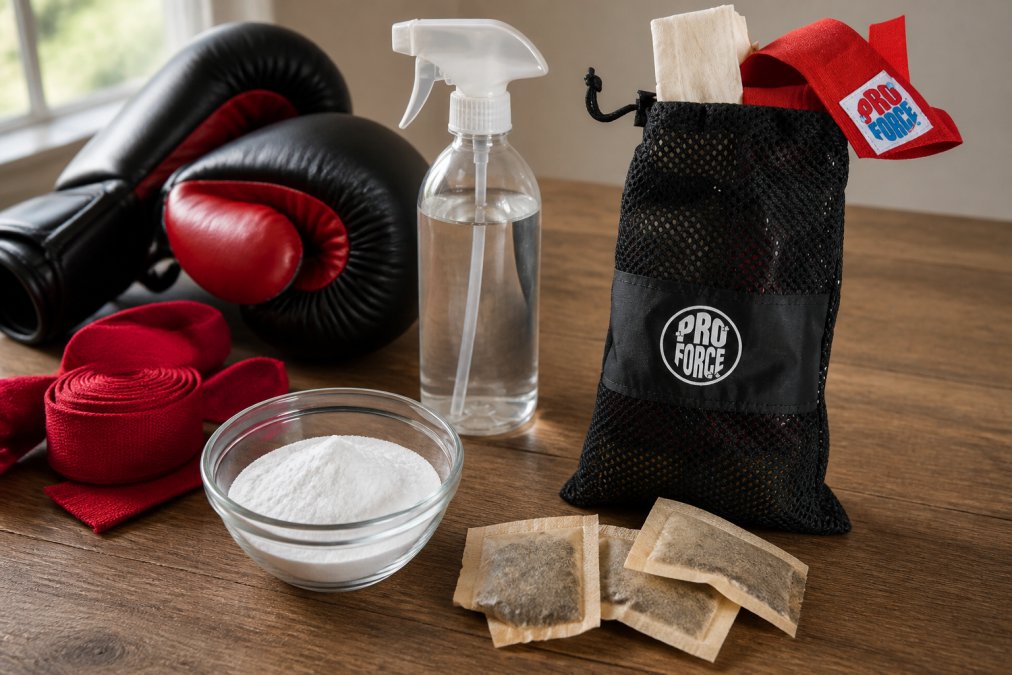
Baking soda method: Fill two small cotton sachets with baking soda and insert one into each glove after training. The baking soda absorbs moisture and neutralizes acidic odor compounds. Replace the sachets monthly or when they stop being effective.
Diluted vinegar spray: White vinegar is a natural antibacterial agent. Mix one part vinegar with two parts water in a spray bottle. Lightly mist the interior of gloves after airing them out. The vinegar smell dissipates within an hour, taking bacterial odor with it.
Tea bag sachets: Dry tea bags, particularly cedar or black tea varieties, are absorbent and contain natural tannins that inhibit bacterial growth. Two dry tea bags per glove, left overnight, can significantly reduce odor between deep cleans.
DIY cedar sachets: Cedar chips in a small mesh bag provide long-lasting odor control and fungal prevention. Cedar contains natural oils that are inhospitable to bacteria and mold.
Safe Chemical Alternatives and What to Avoid
Many commercial disinfectant sprays work well on boxing gloves, but not all are safe for the materials involved.
Safe options:
- Sports equipment sanitizing sprays labeled safe for synthetic leather
- Diluted isopropyl alcohol (70% concentration) applied sparingly to interior surfaces
- Enzyme-based odor eliminators, which break down the organic compounds causing odor
What to avoid:
- Bleach or bleach-based products: these degrade synthetic leather and foam padding rapidly
- Ammonia-based cleaners: similarly destructive to gear materials
- Heavy perfume sprays: these mask odor temporarily but don't address underlying bacterial growth
According to sports hygiene research published by the National Athletic Trainers' Association, enzyme-based cleaners are among the most effective options for eliminating odor-causing bacteria in athletic equipment without damaging materials.
How to Dry Boxing Gloves Quickly Without Damage
Drying boxing gloves quickly is critical for preventing bacterial and fungal growth between sessions, but the method matters as much as the speed.
The fastest safe drying method is hanging gloves upside down in a well-ventilated area with air circulating through the opening. Gravity pulls moisture toward the wrist opening, where it can evaporate more easily.
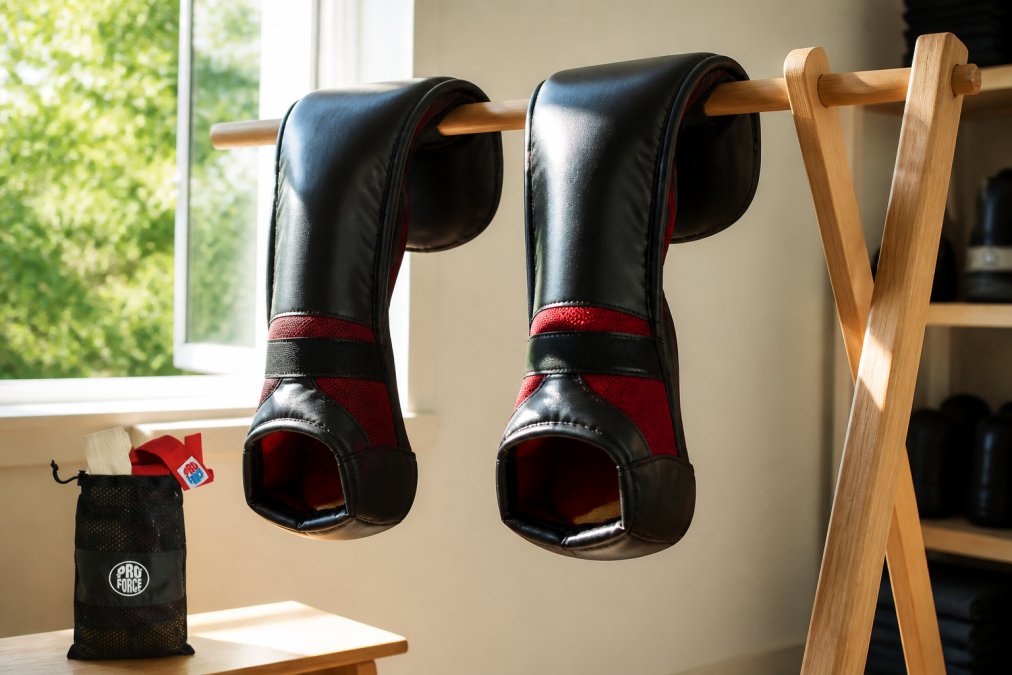
Step-by-step drying protocol:
- Remove gloves immediately after training and prop them open
- Stuff the interior loosely with crumpled newspaper or a dry towel to absorb interior moisture
- After 30 minutes, remove the newspaper and hang gloves upside down
- Position near an open window or in front of a fan for accelerated air circulation
- Allow a minimum of 4-6 hours before storing or using again
A portable dehumidifier in your training area accelerates this process considerably.
What not to do:
- Never place gloves near a radiator, heating vent, or in direct sunlight for extended periods. High heat breaks down the foam padding and causes synthetic leather to crack.
- Never use a hair dryer on the interior. Concentrated heat damages the adhesive bonding the padding layers.
- Never store gloves in a sealed plastic bag while still damp.
Cedar shoe inserts are a superior long-term option to newspaper. They absorb moisture and provide ongoing odor control.
Long-Term Storage Solutions to Prevent Martial Arts Gear Smell
Storage is where most practitioners lose the gains from good cleaning habits. Gear that's been properly cleaned and dried can still develop odor if stored incorrectly.
The core principle is that martial arts gear smell develops in stagnant, humid environments. Your storage solution needs to address both factors.
Ventilated storage options:
- Open mesh shelving in a dry room is the best option for long-term storage
- Wall-mounted hooks keep gear separated and allow air to circulate around each piece
- Avoid stacking gear directly on top of other gear, which traps moisture between items
Humidity control:
A small silica gel dehumidifier packet placed inside your gear bag or storage area absorbs ambient moisture continuously. Replace them every 3-4 months or when they become saturated.
For practitioners in humid climates, a room dehumidifier in the storage area is worth the investment. Maintaining indoor humidity below 50% dramatically slows bacterial and fungal growth on stored gear.
Seasonal deep-clean protocol:
| Gear Type | Cleaning Frequency | Deep Clean Interval | Storage Method |
|---|---|---|---|
| Boxing gloves | Wipe after every session | Monthly vinegar treatment | Hang open on hooks |
| Shin guards | Wipe after every session | Bi-weekly wash | Mesh shelf, separated |
| Hand wraps | Machine wash weekly | N/A | Air dry flat, then roll loosely |
| Headgear | Wipe after every session | Monthly deep clean | Hang on hook or open shelf |
| Mouthguard | Rinse after every session | Weekly tablet soak | Ventilated case |
| Gear bag | Interior wipe weekly | Monthly full clean | Store unzipped |
According to environmental health guidance from the CDC on preventing skin infections in athletic settings, maintaining dry storage conditions and regular equipment cleaning are the most effective preventive measures against skin infections in contact sports athletes.
Odor-prevention sachets for long-term storage:
DIY sachets work as well in storage as they do inside gloves. Fill small muslin bags with a mixture of baking soda and dried cedar chips. Place one inside each piece of padded gear during storage periods. These sachets are especially useful for gear that doesn't get used every week, where moisture can accumulate unnoticed over time.
Gear stored for more than two weeks without any maintenance will almost always develop odor, even if it was clean when put away. A quick inspection and a fresh sachet every two weeks prevents this entirely.
Keeping gear clean is a discipline in itself, and it directly extends the life of equipment that takes real punishment every training session. The martial arts gear smell problem is solvable with consistent habits and the right materials. BlackBeltShop carries the gear and accessories built to withstand rigorous training, including the ProForce Hand Wrap Wash Bag to keep your wraps protected through every wash cycle. We offer martial arts supplies including uniforms (gis), karate supplies, and sparring gear across various disciplines at 10-40% below regular retail. We also provide custom embroidered martial arts black belts tailored to your rank and style, choose custom kanji, names, or academy logos with high-density stitching built to last a lifetime of training. Check out our full range of sparring gear and maintenance accessories, and train knowing your equipment is working as hard as you are.
Frequently Asked Questions
Q: Can I spray Lysol in my boxing gloves?
A: Spraying Lysol inside boxing gloves is not recommended for regular use. The harsh chemicals can break down the synthetic leather lining and foam padding over time, shortening the glove's lifespan. For routine sanitizing, a diluted white vinegar spray or a germicidal spray specifically formulated for sports gear is safer. If you do use a disinfectant spray occasionally, let the gloves air out completely before your next session to avoid skin irritation.
Q: What is the best odor eliminator for boxing gloves?
A: Baking soda sachets placed inside gloves overnight are one of the most effective and affordable odor-neutralizing options. They absorb moisture and neutralize odor-causing bacteria without damaging materials. Cedar inserts and activated charcoal bags work similarly. For a deeper clean, wiping the interior with a diluted vinegar solution (one part white vinegar to two parts water) kills microbial buildup. Avoid leaving gloves sealed in a gear bag after training, as trapped dampness accelerates bacterial growth.
Q: Is it safe to put sparring gear in the washing machine?
A: Some soft sparring gear like hand wraps and fabric shin guard sleeves can go in the washing machine on a gentle, cold-water cycle. Using a mesh wash bag, like the ProForce Hand Wrap Wash Bag, keeps wraps from tangling and protects them from damage. Hard-shell or synthetic leather gear such as boxing gloves, headgear, and rigid shin guards should never go in the machine. Machine washing breaks down the padding and outer materials. Wipe those pieces down by hand with a damp cloth and a mild disinfectant instead.
Q: How often should I wash my martial arts uniform?
A: Wash your gi or uniform after every training session. Sweat-soaked fabric left unwashed even for one day creates the ideal environment for bacterial and fungal growth, which causes persistent odor and fabric degradation. Cold or warm water (not hot) on a gentle cycle preserves the weave and prevents shrinkage. Air-dry whenever possible rather than using a high-heat dryer, which can weaken stitching and cause cotton gis to shrink. Consistent post-workout washing is the single most effective hygiene habit for uniform longevity.
This article was written using GrandRanker