

Table of Contents
- What You'll Need Before You Measure for a Gi
- How to Take Your Body Measurements Step by Step
- Martial Arts Gi Size Chart by Height and Weight
- Karate vs BJJ Gi Sizing Differences
- How a Gi Should Fit: Cuff Length, Jacket Skirt, and Movement
- How to Shrink a Gi (and How to Avoid It)
- Brand-Specific Sizing and Body Type Variations
- Choosing the Right Gi Size with Confidence
Last Updated: August 25, 2026
What You'll Need Before You Measure for a Gi
Getting your gi size right the first time saves you frustration from a uniform that restricts movement or looks oversized. Gi sizing is its own system entirely, separate from street clothing sizes.
Before you measure, gather these items:
- A soft fabric tape measure (not metal)
- A notepad and pen
- A training partner to take measurements (self-measuring introduces error)
- Lightweight, form-fitting athletic clothing
Stand barefoot on a flat surface with good posture, slouching will throw off your height measurement, the single most important number in gi sizing. Write down every measurement immediately.
One important note: gi sizing is not standardized across disciplines or brands. A size A2 in one brand's karate gi may fit noticeably differently from an A2 in a BJJ gi from another manufacturer. This guide will explain those differences so your measurements translate correctly.
How to Take Your Body Measurements Step by Step
Accurate body measurements are the foundation of correct gi fit. Take each measurement twice and average the results if they differ.
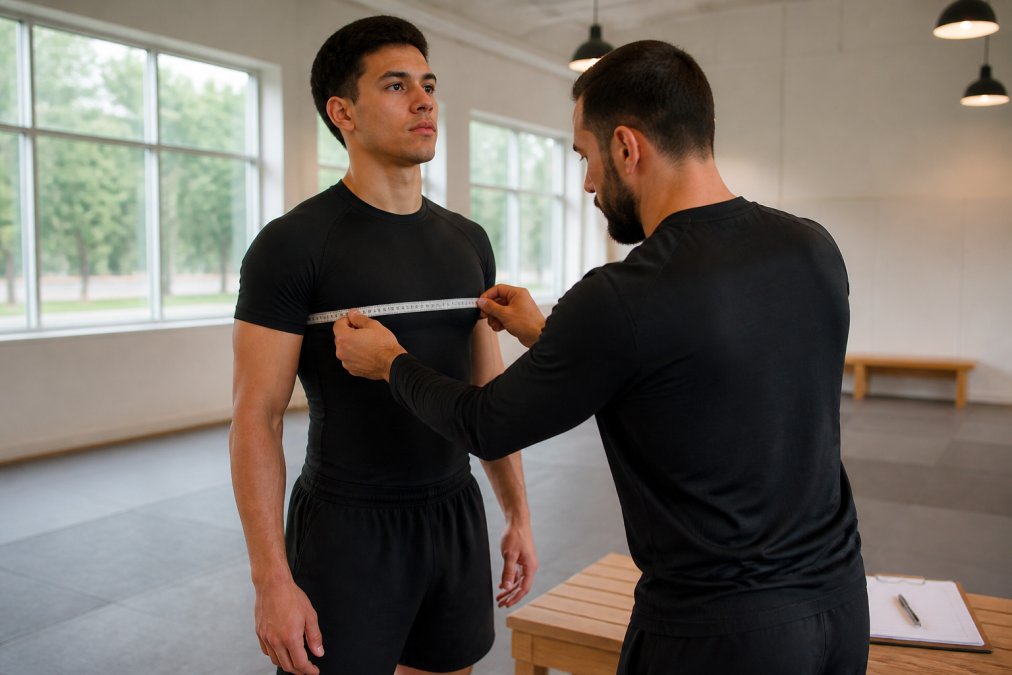
Measuring Height and Weight
Height is the primary driver of gi sizing. Stand barefoot with your back against a flat wall, heels together, and look straight ahead. Have your partner mark the wall at the top of your head and measure from the floor to that mark. Record in both inches and centimeters, as many size charts use metric.
Weight is the secondary check. Most size charts pair a height range with a weight range. If you fall between two sizes, your weight helps break the tie.
Measuring Arm Length and Sleeve Reach
Arm length determines whether the gi cuff will land correctly. Stand with your arm slightly bent at a natural angle. Have your partner measure from the center of the back of your neck, across the shoulder, down to the wrist bone. This sleeve reach measurement is the most reliable way to predict cuff placement on a finished gi.
Measuring Chest, Shoulder Width, and Inseam
Chest: Wrap the tape measure around the widest part of your chest, just under the armpits, keeping it parallel to the floor. Keep one finger's width of slack.
Shoulder width: Measure from the outer edge of one shoulder to the outer edge of the other, across the back. This is particularly useful for BJJ gis, where the jacket cut is more tailored.
Inseam: Measure from the crotch seam down to the ankle bone. This determines pant length.
Martial Arts Gi Size Chart by Height and Weight
The table below reflects general sizing conventions used across many martial arts disciplines. Always cross-reference with the specific brand's size guide before ordering.
| Size Code | Height Range | Weight Range | Typical Use |
|---|---|---|---|
| 000 / 0000 | 3'0" - 3'6" (90-105 cm) | Under 40 lbs (under 18 kg) | Young children |
| 00 / 0 | 3'6" - 4'0" (105-120 cm) | 40-55 lbs (18-25 kg) | Children |
| 1 / A0 | 4'0" - 5'0" (120-152 cm) | 55-110 lbs (25-50 kg) | Youth / small adults |
| 2 / A1 | 5'0" - 5'5" (152-165 cm) | 110-145 lbs (50-66 kg) | Small adults |
| 3 / A2 | 5'5" - 5'9" (165-175 cm) | 145-175 lbs (66-79 kg) | Average adults |
| 4 / A3 | 5'9" - 6'0" (175-183 cm) | 175-210 lbs (79-95 kg) | Larger adults |
| 5 / A4 | 6'0" - 6'3" (183-190 cm) | 210-250 lbs (95-113 kg) | Tall / heavy adults |
| 6 / A5 | 6'3"+ (190+ cm) | 250+ lbs (113+ kg) | Very tall / heavy adults |
Adult Sizing Codes Explained
Adult gi sizing uses two parallel systems. Karate and taekwondo gis traditionally use a numeric scale (0 through 7 or 8), while BJJ gis use an alphanumeric system starting with A0 and running through A5 or A6. Some brands add modifiers: A2L for long-limbed practitioners, A2H for heavier builds at the same height.
Children's Sizing and How It Differs
Children's gi sizing prioritizes height because kids' proportions change rapidly. Most children's sizes run from 000 up to size 2 or 3, at which point many brands transition to adult sizing. A child who is tall for their age but lighter than average should size by height.
Parents should account for growth room. Buying one size up is common, but a gi that is two sizes too large will bunch at the knees and wrists, creating a tripping hazard.
Karate vs BJJ Gi Sizing Differences
Karate and BJJ gis are fundamentally different garments designed for different demands.
Karate gis are cut for upright, striking-based movement. The jacket is longer, the sleeves are wider, and the overall silhouette is looser. The fabric is typically 8 oz to 12 oz, designed for speed. Because the fit is intentionally relaxed, karate gi sizing tends to be more forgiving of minor measurement errors.
BJJ gis are built for grappling. The jacket is shorter and more tailored, the collar is reinforced and stiffened, and the fabric is heavier, often 450 gsm pearl weave or gold weave cotton. This denser construction means BJJ gis run tighter in the chest and shoulders. If you're transitioning from a karate gi to a BJJ gi, expect to size up at least once.
According to USA Jiu-Jitsu Federation's competition rulebook, gi sleeves must reach within a defined distance of the wrist bone during competition, making accurate sleeve length measurement non-negotiable for competitors.
How a Gi Should Fit: Cuff Length, Jacket Skirt, and Movement
A properly fitted gi allows full range of motion without excess fabric that an opponent can grab.
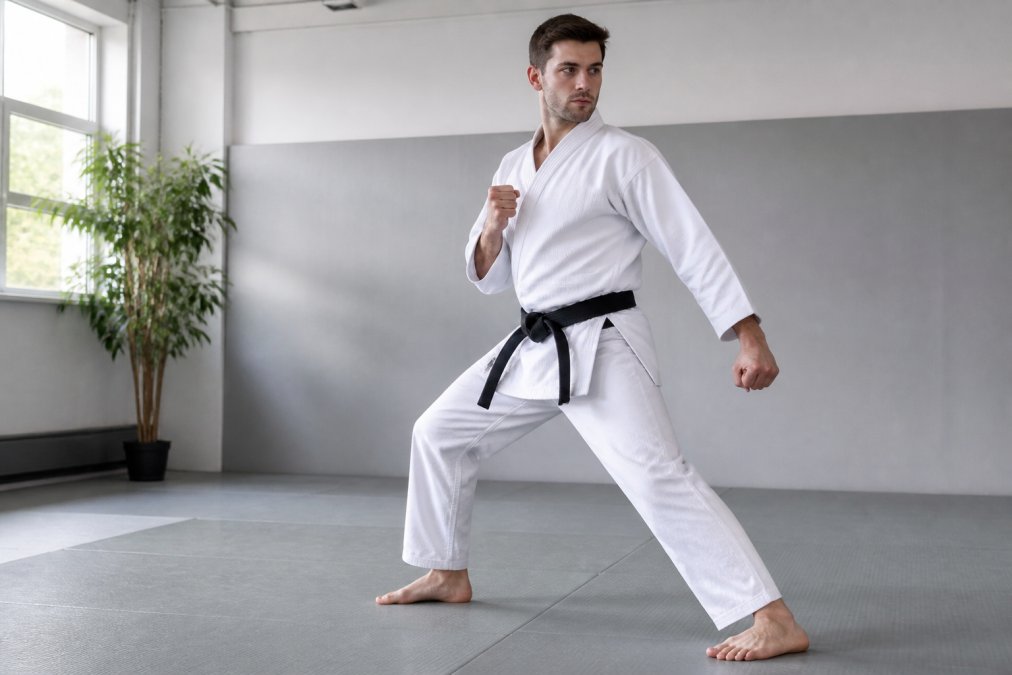
Sleeve cuff placement: The gi cuff should end approximately 1 to 2 inches above the wrist bone, allowing the wrist to move freely.
Jacket skirt length: The jacket hem should fall no lower than mid-thigh. A jacket that reaches the knee will bunch during ground movement.
Pant length: The gi pant cuff should sit between the mid-calf and the ankle bone. Competition rules in most organizations, including those governed by USA Karate's official competition standards, specify minimum pant length.
Shoulder seam placement: The shoulder seam should sit at the edge of the shoulder, not drooping onto the upper arm.
Movement test: Once the gi is on, perform a deep squat, raise both arms overhead, and simulate a roundhouse kick. The jacket should stay tucked, the pants should not pull tight across the hips, and the sleeves should not slide past the wrist.
How to Shrink a Gi (and How to Avoid It)
Most cotton gis will shrink. Understanding this process is important because your pre-wash measurements and post-wash reality can differ meaningfully.
Pre-shrunk gis have been washed and dried by the manufacturer before shipping, reducing shrinkage to a minimal amount. Non-pre-shrunk gis, common in heavier BJJ gis, may shrink noticeably in the first two or three washes. Many experienced practitioners deliberately buy one size up and then shrink the gi to their target fit.
To shrink a gi deliberately:
- Wash in hot water (highest temperature setting)
- Dry on high heat in a dryer
- Check the fit after each cycle before repeating
- Stop once you reach the desired fit
To avoid unwanted shrinkage:
- Wash in cold water
- Air dry or use low heat
- Check the care label
According to textile care guidelines from the American Cleaning Institute, cotton fabrics shrink most during the first wash-and-dry cycle, with diminishing shrinkage in subsequent cycles.
Brand-Specific Sizing and Body Type Variations
There is no universal gi sizing standard enforced across manufacturers. Each brand defines its own size chart, cut, and tolerance ranges. A practitioner who wears an A2 in one brand's BJJ gi may find that another brand's A2 fits differently in the chest or torso length.
Body type variations matter. Standard size charts are built around average proportions. If your measurements don't fit the standard ratio, you'll need to compensate:
- Long arms, average torso: Look for brands that offer "L" modifier sizes (A2L, 3L) or check sleeve length specifications directly in centimeters.
- Broad shoulders, narrow waist: Size for the shoulders in the jacket, then use the drawstring waist on the pants.
- Short legs, average height: Gi pants often have a generous inseam allowance. Many practitioners hem their pants.
- Heavier build at average height: Look for "H" or "Heavy" modifier sizes.
Read size charts in centimeters rather than relying on size codes alone. A chart that gives you jacket chest width, sleeve length, and pant inseam in actual measurements is far more useful than one that just says "A2: 5'7" - 5'10"."
Choosing the Right Gi Size with Confidence
Knowing how to measure for a martial arts gi correctly removes most guesswork from the buying process. Take accurate measurements with a soft tape measure, cross-reference those measurements against the specific brand's size chart in centimeters, account for shrinkage based on whether the gi is pre-shrunk, and factor in your body type if your proportions fall outside the standard ratio.
The biggest mistake practitioners make is assuming their street clothing size translates to gi sizing. It doesn't.
A summary of the key decisions:
| Decision Point | What to Check | Why It Matters |
|---|---|---|
| Jacket size | Chest and shoulder width | Determines range of motion |
| Sleeve length | Neck-to-wrist measurement | Affects cuff placement |
| Pant size | Inseam and hip circumference | Prevents restriction during kicks |
| Size code | Brand-specific chart in cm | Codes vary between brands |
| Shrinkage | Pre-shrunk vs. raw cotton | Affects final fit after washing |
| Body type | Arm-to-torso ratio | May require modifier sizes |
If you're still uncertain after taking your measurements, reach out before you order. The team at BlackBeltShop has 99.7% positive feedback across 14,728 reviews, and a significant part of that comes from helping practitioners get the right size the first time.
Getting the right gi size requires accurate measurements and an understanding of how sizing varies between disciplines and brands. BlackBeltShop offers a comprehensive range of martial arts uniforms for karate, BJJ, taekwondo, and MMA, with expert assistance to match your measurements to the right fit. With free shipping on orders over $129 and a team that genuinely knows the gear, getting sized correctly has never been more straightforward. Check out the full gi selection at BlackBeltShop and find the uniform that fits your training.
Frequently Asked Questions
How do I know what size gi I need?
Start with your height and weight, then cross-reference a gi size chart for the specific brand you're buying from. Because brands use different sizing scales, a size A2 from one manufacturer may fit differently than an A2 from another. Always check the brand's own fit guide, and if you're between sizes, consider whether the gi is pre-shrunk or will shrink after washing, then size up to be safe.
What size BJJ gi fits a 5'11" 165 lb man?
Most BJJ gi size charts place a 5'11", 165 lb man in an A2. However, if you have a longer torso or broader shoulders, an A2L (long) may give you better jacket length and sleeve reach without excess width. Always confirm against the specific brand's size chart, since BJJ gi sizing is not standardized across manufacturers.
What is the difference between karate and BJJ gi sizing?
Karate gis use K-series size codes (K0, K1, K2, etc.) and are cut lighter and looser for striking and kicking range. BJJ gis use A-series codes (A0 through A5) and are cut closer to the body with reinforced stitching to handle grappling stress. The same person typically needs a different size in each style, so measuring for a martial arts gi separately for each discipline is important.
How much should I account for gi shrinkage?
A standard cotton gi can shrink 5-10% in the first few washes if it is not pre-shrunk. If you are between sizes, ordering one size up and then washing in warm water can bring the gi down to a closer fit. Pre-shrunk gis reduce this risk significantly. Always check the product label before washing to avoid over-shrinking a gi that already fits well.
This article was written using GrandRanker