

Table of Contents
- What Makes Sparring Gear Regulation Compliant
- Understanding Safety Standards and Certifications
- Best Protective Sparring Gear for Kids
- Martial Arts Sparring Gear Requirements by Discipline
- Training Gear vs. Competition-Ready Equipment
- How to Clean and Maintain Sparring Gear
- Identifying Counterfeit and Non-Compliant Gear
- Frequently Asked Questions
Last Updated: September 3, 2026
What Makes Sparring Gear Regulation Compliant
Regulation compliant sparring gear meets specific safety standards set by governing bodies in martial arts disciplines. These standards ensure protective equipment provides adequate impact absorption, foam density, and shock absorption during training and competition. The difference between casual training gear and regulation compliant sparring gear comes down to certification, whether equipment has been tested and approved by recognized authorities like the World Karate Federation (WKF), Amateur Athletic Union (AAU), or World Taekwondo Federation (WTF).

At BlackBeltShop, we understand that regulation compliant sparring gear protects your body while meeting your discipline's requirements. Equipment carrying proper certification demonstrates it has undergone impact testing, material evaluation, and ergonomic assessment. When choosing gear for serious training or competition, compliance matters because it signals the manufacturer invested in safety.
The core elements include proper protective padding with appropriate foam density, secure fit that stays in place during movement, breathable materials for extended wear, and certifications from recognized governing bodies. A mouthguard certified for your discipline, shin guards meeting impact absorption standards, and a chest protector with proper padding thickness all contribute to overall compliance.
Understanding Safety Standards and Certifications
Safety standards exist because martial arts involves contact and contact creates risk. Organizations like the WKF, WTF, and AAU establish testing protocols that equipment must pass before receiving approval. These standards define minimum requirements for impact absorption, material durability, and protective coverage.
Different disciplines recognize different certifying bodies. Karate practitioners look for WKF approval, which ensures headgear, mitts, shin guards, and foot protectors meet specific impact resistance requirements. Taekwondo athletes prioritize WTF certification for chest protectors and headgear. Jiu-jitsu and MMA have standards based on competition rulebooks rather than single governing organizations. Understanding which certification applies to your discipline prevents buying gear that looks protective but doesn't meet competition rules.
The certification process involves laboratory testing where protective gear is subjected to controlled impact forces. Foam density, padding thickness, and material composition are evaluated. Headgear must reduce impact force to safe levels. Mouthguards are assessed for retention and comfort. Shin guards are tested for impact absorption. This testing is based on actual forces generated during martial arts techniques.
When you see "WKF approved" or "AAU approved" on a product, verify it independently by checking official WKF or AAU equipment lists. BlackBeltShop carries products like the Tokaido WKF Approved Shin and Instep Sparring Gear and Tokaido WKF Approved Karate Mitt, both carrying verified WKF certification.

Best Protective Sparring Gear for Kids
Children need protective gear that fits properly, stays secure during active movement, and meets safety standards appropriate for their size and skill level. Kids' sparring gear differs from adult equipment in smaller sizing, lighter padding weights that still provide protection, and materials chosen for comfort during extended wear. A child who feels uncomfortable in their gear will resist wearing it, defeating protection's purpose.
Essential pieces include headgear with proper face protection, a fitted mouthguard, a chest protector, shin guards, and hand protection. Each piece should be age-appropriate and discipline-specific. Proper fit is crucial, gear that's too loose shifts during movement and leaves gaps; gear that's too tight restricts breathing.
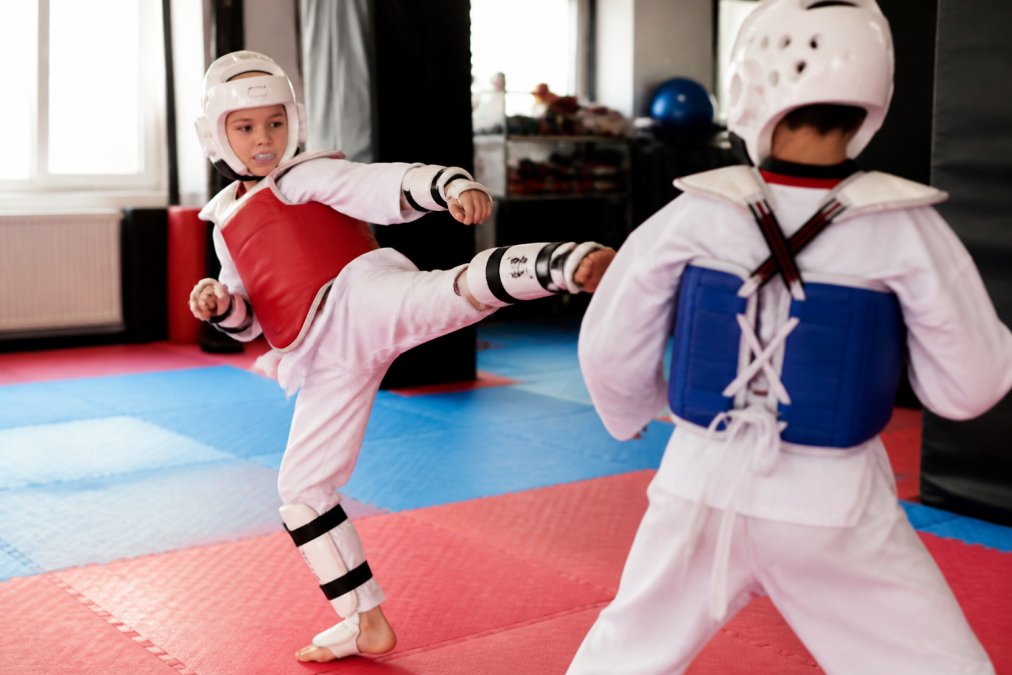
When selecting gear for kids, involve them in the fitting process. Have them perform basic techniques, kicks, punches, and defensive movements while wearing equipment. Watch for gaps that appear during movement. Check that headgear doesn't shift forward or backward. Ensure the chest protector stays centered. Proper fit means gear moves with the child, not against them.
Material choice affects comfort significantly. Kids are more sensitive to rough textures and heat buildup than adults. Look for breathable fabrics that wick moisture and padding that's firm enough to protect without excessive heat. The Punok White Shin In-Step AAU Approved guards offer protection while maintaining comfort kids need for sustained training.

Age-specific compliance matters too. Gear approved for youth competition meets different standards than adult competition gear. If your child competes, verify that their equipment meets specific age division requirements for their tournament circuit.
Martial Arts Sparring Gear Requirements by Discipline
Each martial arts discipline has evolved its own equipment standards based on techniques practitioners use and contact levels they experience. Karate emphasizes hand and foot techniques with controlled contact, so regulation compliant sparring gear focuses on hand protection, shin guards, and foot protectors. Taekwondo involves high, fast kicks, making headgear and chest protection paramount. Jiu-jitsu prioritizes joint protection and mat awareness over striking protection. Understanding your discipline's specific requirements ensures you buy gear that protects against techniques you'll face.
Karate gear focuses on hand, foot, and shin protection. WKF regulations specify that mitts must have certain thickness and cover the hand and wrist adequately. Shin guards must protect the tibia and instep. Footpads protect the top of the foot from kicks. Headgear is required in many karate contexts, particularly for younger practitioners. The Tokaido WKF Approved Shin and Instep Sparring Gear and Tokaido WKF Approved Karate Mitt from BlackBeltShop meet these specific requirements.
Taekwondo equipment emphasizes the chest protector because WTF rules allow full-force kicks to the torso. The chest protector must absorb significant impact while remaining lightweight enough for taekwondo's speed. Headgear must protect against spinning heel kicks and fast hand techniques. The Adidas New Body Protector WTF Approved provides the specific protection taekwondo athletes need, with WTF certification backing its compliance.
Jiu-jitsu and grappling sports have different requirements because submissions and joint locks dominate. Protective gear focuses on ear guards, knee pads, and elbow protection rather than striking protection. Joint support and abrasion resistance matter more than impact absorption. Gi quality becomes critical since the uniform itself is part of the protective system.
MMA and mixed martial arts require a hybrid approach since practitioners face both striking and grappling. Hand protection, shin guards, headgear, and mouthguards all matter. However, MMA competitions often have stricter regulations than training, so equipment approved for training might not meet competition standards. Always verify specific requirements with your competition organization before investing in gear.
| Discipline | Key Protective Pieces | Primary Certification | Primary Risk |
|---|---|---|---|
| Karate | Hand mitts, shin guards, headgear | WKF | Striking to hands, feet, legs |
| Taekwondo | Chest protector, headgear, hand gear | WTF | High kicks to torso and head |
| Jiu-jitsu | Ear guards, knee pads, gi quality | Tournament rules vary | Joint locks, mat abrasion |
| MMA | Hand gear, shin guards, headgear, mouthguard | Athletic commission | Mixed striking and grappling |
Training Gear vs. Competition-Ready Equipment
Training gear and competition-ready equipment serve different purposes. Training gear prioritizes durability, comfort, and protection during repeated practice. You'll wear training gear dozens of times, so it needs to withstand frequent use, washing, and consistent practice wear. Competition gear must meet specific regulatory standards and often emphasizes performance and compliance over durability.
Training gear can be less rigid about certifications because training environments are controlled. Your instructor can modify rules or stop sparring if someone gets hurt. Competition gear must meet strict standards because judges, referees, and rule enforcement bodies will inspect it. A training piece that's perfectly safe for your dojo might not pass competition inspection because it lacks required certification marks or doesn't meet specific material standards.
The difference often shows in comfort features. Training gear might have extra padding in areas that take repeated impact during drills. Competition gear is designed to meet minimum standards while remaining light enough for optimal performance. A competition headgear might be sleeker and less padded than a training headgear because competition rules define minimum protection required.
If you're a beginner focusing on training, start with quality training gear that will last through months of regular practice. As you progress toward competition, upgrade to regulation compliant sparring gear meeting your discipline's specific standards. Many practitioners maintain both, comfortable, durable training gear for daily practice and certified competition gear for tournaments.
How to Clean and Maintain Sparring Gear
Sparring gear absorbs sweat, bacteria, and odor during training. Proper maintenance extends equipment life, prevents hygiene issues, and keeps gear in compliance condition. Protective padding can degrade if not cared for properly, affecting both safety and compliance.
Hand protection and mitts should be wiped down after every training session. Use a damp cloth to remove surface sweat and debris. Air-dry completely before storing; trapped moisture creates odor and promotes material breakdown. Weekly, wash hand gear in cool water with mild detergent. Avoid hot water, which damages padding and foam density. Never machine wash or dry protective gear; agitation and heat compromise structural integrity.
Headgear requires similar care. Wipe the interior after each session, as sweat accumulates inside padding. Weekly washing in cool water prevents bacteria buildup. Allow headgear to air-dry completely in a well-ventilated space. Never leave wet headgear in a bag; moisture accelerates material degradation and creates persistent odor.
Shin guards and foot protectors benefit from regular cleaning because they contact the mat and absorb significant sweat. Rinse after training, wash weekly, and air-dry thoroughly. Check padding regularly for compression or degradation signs. Protective padding that's become thin or hard no longer provides adequate impact absorption and should be replaced.
Mouthguards need daily cleaning. Rinse with cool water after each use, then soak in denture cleaner or mouthguard-specific cleaning solution weekly. Never use hot water, which warps material. Store mouthguards in a ventilated case allowing air circulation; sealed cases trap moisture and promote bacterial growth.
Chest protectors and larger protective pieces should be hand-washed in cool water and hung to dry. Never wring or squeeze protective gear aggressively. Padding needs to maintain its structure, and rough handling compresses it permanently. Replace protective gear if padding becomes visibly compressed, cracked, or hardened.
Identifying Counterfeit and Non-Compliant Gear
Counterfeit martial arts equipment exists in the market, particularly for popular brands and WKF-approved products. Counterfeit gear looks similar to legitimate equipment but lacks proper certification, uses inferior materials, and provides inadequate protection. Learning to identify counterfeits protects both your safety and your investment.
Legitimate regulation compliant sparring gear carries clear certification marks. WKF-approved equipment displays the WKF logo and approval number on the product and packaging. WTF-approved taekwondo gear carries WTF certification marks. AAU-approved equipment has AAU documentation. If certification marks are missing, unclear, or poorly printed, that's a red flag. Counterfeits often skip certification marks entirely because they can't legally claim approval.
Examine material quality closely. Legitimate protective gear uses consistent foam density and quality stitching. Counterfeit gear often has uneven padding, loose stitching, or cheap-feeling materials. Padding should be firm and uniform; if it compresses easily or unevenly, foam density is inadequate. Run your hand along seams; they should be straight and tight. Loose stitching indicates poor manufacturing.
Check packaging and documentation. Legitimate products come with clear labeling showing manufacturer, size, and certification information. Packaging should be professional and include care instructions. Counterfeit packaging often has spelling errors, unclear printing, or missing information. If packaging looks hastily assembled, the product likely is too.
Purchase from authorized retailers. BlackBeltShop carries verified products from established manufacturers. Buying from unknown online sellers or suspiciously cheap sources increases counterfeit risk. If a price seems too good to be true, it probably is.
Request documentation of certification. Legitimate retailers can provide proof that products carry genuine certifications. If a seller can't provide this documentation, walk away. BlackBeltShop stands behind the products we carry, including the Punok Karate White Punches AAU Approved and other certified equipment, with full transparency about certifications and compliance.
Verify serial numbers or approval codes when available. Many certified products include a way to verify authenticity through the certifying body's website. Take minutes to check; it protects you from counterfeit gear that won't meet compliance standards and may not protect adequately.
Choosing regulation compliant sparring gear protects your body and ensures you meet your discipline's standards. Whether training at your local dojo or competing in sanctioned tournaments, equipment carrying proper certification gives you confidence it's been tested and meets established safety benchmarks. BlackBeltShop provides verified, certified protective gear across multiple disciplines, with expert assistance to help you find equipment matching your specific needs and training goals. Check out our selection of WKF-approved karate gear, WTF-approved taekwondo equipment, and AAU-approved sparring protection, all backed by our commitment to quality, durability, and compliance.
Frequently Asked Questions
How do I know if my sparring gear is regulation compliant?
Check for official certification marks from governing bodies like the World Karate Federation (WKF), Amateur Athletic Union (AAU), or World Taekwondo Federation (WTF). Look for tags or labels indicating the certification standard. Verify the manufacturer's documentation and purchase from authorized retailers. Regulation compliant sparring gear will always display certification information prominently on packaging and product descriptions.
What are the safety standards for martial arts sparring equipment?
Safety standards vary by discipline. WKF-approved karate gear requires specific foam density, impact absorption, and protective padding thickness. WTF standards for taekwondo specify chest protector, headgear, and shin guard requirements. AAU regulations mandate specific colors and protection levels for competition. All standards emphasize impact absorption, breathable materials, ergonomic fit, and shock absorption to prevent injury during full contact and point sparring.
Do I need different sparring gear for different martial arts?
Yes. Karate emphasizes hand and foot protection with specific WKF-approved mitts and shin guards. Taekwondo requires WTF-approved chest protectors and electronic scoring-compatible headgear. MMA and jiu-jitsu have distinct requirements for glove weight, padding density, and protection coverage. Each discipline has unique impact patterns and contact zones, so gear designed for one sport may not meet the safety standards or regulations of another.
What is the difference between training gear and competition-approved gear?
Training gear prioritizes comfort and durability for frequent use, while competition gear must meet specific regulatory standards set by governing bodies like WKF or WTF. Competition gear has stricter requirements for foam density, protective padding, color specifications, and impact testing. Training gear may have more breathable materials and flexible sizing, but competition gear ensures you meet tournament entry requirements and safety certifications required for sanctioned events.
How often should I replace my sparring protective equipment?
Inspect all gear regularly for cracks, compressed foam, and deteriorated padding. High-density stitching and quality materials extend gear lifespan, but protective padding requires replacement once it loses shock absorption capability.
What protective padding requirements apply to regulation compliant gear?
Regulation compliant sparring gear requires specific foam density to ensure adequate impact absorption. WKF standards mandate minimum padding thickness on shins, insteps, and hands. Chest protectors need sufficient foam density to protect vital organs during full contact sparring. Headgear requires impact-absorbing padding around the crown, temples, and jaw. All padding must maintain structural integrity through repeated impact testing to meet certification standards.
Can I use training gear for competition sparring?
No. Competition sparring requires gear that meets specific regulatory standards from governing bodies. Training gear may not have the required certification marks, proper foam density, or approved color specifications. Using non-compliant gear can result in disqualification from tournaments. Always verify that your equipment carries official certification (WKF, WTF, AAU) before entering any sanctioned competition to ensure you meet all safety and regulatory requirements.
This article was written using GrandRanker