

Table of Contents
- Tiger Claw vs Century Martial Arts: Head-to-Head Comparison
- How to Choose a Martial Arts Uniform
- Durability and Longevity: What Lasts Through Hard Training
- Sparring Gear and Protective Equipment Breakdown
- KungFu4Less Alternative for Durable Gear
- Martial Arts Gear Maintenance Tips
- Which Brand Should You Choose?
- Conclusion
- Frequently Asked Questions
Last Updated: September 25, 2026
Tiger Claw vs Century Martial Arts: Head-to-Head Comparison
Tiger Claw vs Century Martial Arts is the comparison most students run into when they outgrow their first uniform. Both brands have supplied dojos for decades. This guide from BlackBeltShop breaks down where each one earns its reputation and where it falls short.
Brand Reputation and Market Position
Century Martial Arts is a long-established equipment manufacturer known for sparring gear and freestanding bags. Schools buy Century in bulk because sizing is consistent and replacement parts are easy to source.

Price Accessibility and Value
Value in martial arts gear comes down to cost per year of use, not sticker price. A cheaper gi that tears at the shoulder seam in eight months costs more than a heavier one that lasts three years.
How to Choose a Martial Arts Uniform
Choosing a martial arts uniform starts with your discipline, not your budget. Karate, taekwondo, judo, and jiu-jitsu each use different cuts, weights, and reinforcement patterns, and a uniform built for one will fight you in another.
Material Matters: Cotton vs Synthetic Blends
Traditional cotton gis breathe well and hold their shape through repeated washing. Heavier cotton weaves resist tearing during grip-heavy arts like judo and jiu-jitsu.
Sizing and Fit for Different Disciplines
Sizing rules vary by art. Striking arts allow a slightly shorter sleeve and pant so kicks stay unobstructed. Grappling arts need a roomier cut with a thicker collar that will not stretch out.
Durability and Longevity: What Lasts Through Hard Training
Durability in martial arts gear comes from three things: fabric weight, seam construction, and how the gear is treated between sessions. A 14 oz cotton gi with double-stitched seams will outlast a lighter uniform with single stitching.
Sparring Gear and Protective Equipment Breakdown
Sparring gear protects the highest-risk areas: head, hands, feet, and shins. Century has a strong footprint here, and its student-level equipment is widely used in karate and taekwondo schools. But the brand label matters less than matching the gear to your type of contact.
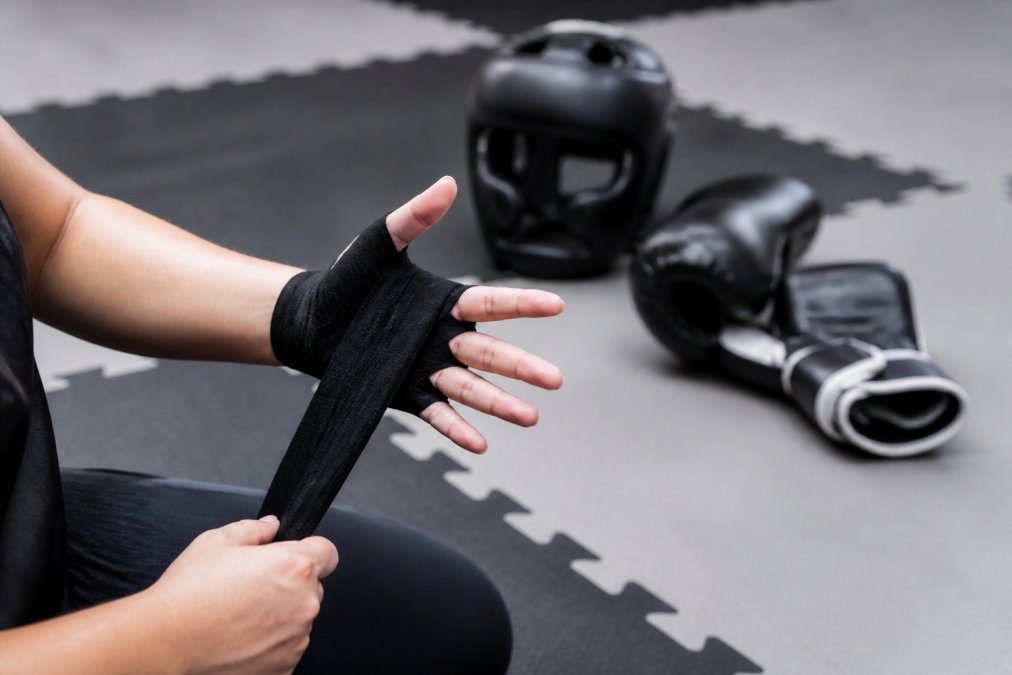
Glove Weight and Design: What Changes With Each Option
Sparring gloves are sold by weight, a trade-off between hand speed and protection. Lighter gloves (4 to 6 oz) suit point-style karate and taekwondo, where speed scores. Heavier gloves (10 to 16 oz) are standard in boxing, kickboxing, and MMA-style contact, where padding absorbs repeated hard impacts. A beginner in light contact usually does fine at 6 to 8 oz; anyone doing continuous or full-contact rounds should size up.
Headgear and Hand Protection
Headgear should absorb impact without blocking your field of view. The Century Student headgear Karate Sparring Gear uses lightweight foam with an open-face design, built-in ear protection, and a hook-and-loop closure for an adjustable fit. It comes in multiple sizes for youth and adult students.
Foot and Shin Guards
Foot and shin guards take the most abuse in kicking arts. The CENTURY Hi KICKS karate sparring boots use durable foam construction, a lightweight build, non-slip soles, and adjustable straps for a secure fit.

The Full Protective Equipment Checklist
Gloves and headgear are not the whole kit. Depending on your art and your school's rules, a complete sparring setup usually includes:
Century Student headgear Karate →
- Mouthguard, protects teeth and reduces the chance of a jaw injury from an upward strike.
- Groin protection, standard for male students in most contact styles.
- Chest protector, common in taekwondo and some karate competition divisions.
- Shin and instep guards, covered above, but required in most kicking arts.
- Forearm guards, used in some styles to protect against blocked kicks.
- Hand wraps, not always mandatory, but they add wrist and knuckle support under gloves.
KungFu4Less Alternative for Durable Gear
If you are searching for a KungFu4Less alternative for durable gear, the practical question is not which store has the largest catalog, it is which one stocks equipment that survives a full training year. Large catalogs often mix quality levels, making heavy-duty items hard to tell from budget ones.
| Gear Category | What to Check | Why It Matters |
|---|---|---|
| Uniforms (gis) | Fabric weight, seam reinforcement | Predicts how long the gi survives weekly washing |
| Sparring gloves | Knuckle padding, closed thumb, wrist strap | Reduces hand and finger injuries during drills |
| Headgear | Foam density, open-face cut, ear coverage | Protects without blocking visibility |
| Foot and shin guards | Coverage length, non-slip sole | Prevents shin and foot injuries in kicking arts |
| Training bags | Base fill, height adjustment, cover material | Determines stability and usable lifespan |
Martial Arts Gear Maintenance Tips
Gear maintenance comes down to drying, cleaning, and storage, in that order. Most gear failures trace back to moisture left in fabric or foam, not hard training. Damp, dirty gear is also a hygiene problem: shared mats plus shared sweat is how skin infections spread through a training room.
Why Odor and Bacteria Matter More Than You Think
Foam padding, fabric liners, and gloves all trap sweat, and sweat feeds bacteria and fungus. The result is not just a smell but a real risk of contact-sport skin conditions, including ringworm and bacterial infections that spread between training partners. The gear that smells worst is usually the gear that is hardest to dry, which is why gloves and headgear need more attention than a gi.
How to Clean Each Type of Gear
Different materials need different treatment, the wrong method can break down foam or shrink fabric.
- Cotton gis: Wash in cold water and hang dry. Cold water limits shrinkage, and air drying protects the weave. Avoid fabric softener, which coats the fibers and can reduce absorbency.
- Synthetic blends: These tolerate warmer washing and dry faster, but check the care tag, some blends pill or lose shape in high heat.
- Foam sparring gear (gloves, headgear, shin guards): Wipe down the inside and outside with a mild soap or disinfecting wipe after every session, then air dry fully before storing. Never soak foam, and never machine-dry it.
- Vinyl bag covers: Wipe with a mild solution and dry completely. Vinyl traps moisture underneath if stored damp.
- Hand wraps: Wash after every use. Wraps sit directly against the skin and are one of the most overlooked sources of odor and irritation.
Drying and Storage
Drying is where most gear care succeeds or fails. Air-dry uniforms and sparring gear after every session; never leave damp gear in a bag overnight. Store gear loosely so foam keeps its shape and air circulates. If you train daily, rotating two uniforms gives each a full day to dry and extends fabric life.
Which Brand Should You Choose?
Pick Century for sparring gear, headgear, foot guards, and freestanding training bags. Its protective equipment is consistent, widely sized, and easy to replace piece by piece as students grow.
Conclusion
Outfitting a student or home gym means juggling uniforms, protective gear, and training bags across several brands, and getting sizing wrong is the most common and expensive mistake. BlackBeltShop stocks gear for karate, taekwondo, jiu-jitsu, and MMA, offers free shipping on orders over $129, and provides expert help matching equipment to your discipline and goals.
Frequently Asked Questions
Which brand is better for beginner martial arts uniforms?
For beginners, the priority is a uniform that fits well and holds up through frequent washing. Century offers a wide selection of entry-level gis and uniforms, while Tiger Claw tends to cater more to traditional martial artists. Look for a medium-weight cotton or cotton-poly blend that resists shrinking. Brands like BlackBeltShop carry options across both styles at prices 10-40% below regular retail, with free shipping on orders over $129.
Does Century Martial Arts offer better durability for sparring gear?
Century's sparring gear, such as the Student Headgear and Hi KICKS boots, uses foam construction designed for impact absorption and repeated contact. Durability depends on training intensity and how well you maintain the gear. Vinyl and synthetic leather covers resist sweat and wear better than bare foam. Wiping gear down after each session and storing it in a ventilated bag extends its lifespan significantly.
Are Tiger Claw products suitable for professional MMA training?
Tiger Claw primarily focuses on traditional martial arts uniforms and training weapons rather than MMA-specific gear. For MMA competition, you need equipment that meets specific regulations for gloves, shin guards, and groin protection. Century offers freestanding bags like the BOB Punching Bag and XXL Wavemaster that work well for MMA striking practice. Always verify that any gear meets your competition's requirements before purchasing.
How do these brands compare in terms of price and accessibility?
Tiger Claw and Century both offer gear across a range of price points. Century products are widely available through retailers, with headgear starting at $39.99 and sparring boots at $35.99 through BlackBeltShop. Tiger Claw is often found through specialty martial arts suppliers. Accessibility depends on what you need: uniforms and protective gear are easy to find, while discipline-specific training weapons may require more searching.
What are the best alternatives to Tiger Claw and Century Martial Arts for budget gear?
If you want durable gear without paying full retail, look for retailers that sell below standard pricing. BlackBeltShop offers martial arts equipment at 10-40% below regular retail, including Century headgear, sparring boots, and freestanding punching bags. The Century Original Wavemaster starts at $199.99, and the Student Headgear at $39.99. Check return policies and shipping thresholds before ordering to avoid surprises.