

Table of Contents
- Why Competitors Look Beyond Tokaido
- WKF Approved Karate Gi Options That Deliver
- Kumite vs. Kata: Choosing the Right Uniform Type
- Polycotton vs. Cotton Gi: Fabric Performance Breakdown
- Karate Gi Sizing Guide for Proper Fit and Movement
- Durability and Long-Term Wear: What Lasts Beyond Competition
- Making Your Choice: Top Tokaido Alternatives Compared
- Conclusion
- Frequently Asked Questions
Last Updated: September 20, 2026
Why Competitors Look Beyond Tokaido
Among serious karate athletes, tokaido alternatives competition gis have become increasingly popular. The reason isn't hard to understand: while Tokaido holds a strong reputation, many practitioners discover that other options deliver superior performance, better durability, and more flexibility for specific competition styles.
At BlackBeltShop, we've analyzed what drives athletes to explore alternatives. The most common factors are fabric weight preferences, specific federation requirements, and the need for customization options that match individual training intensity. Some competitors prioritize lightweight designs for speed, while others demand heavier fabrics that produce the crisp "snap" essential in kata competition.
The World Karate Federation (WKF) approval requirement narrows the field considerably. Not every gi manufacturer meets these strict standards, which means your choices, while broader than many assume, still demand careful evaluation. Understanding what separates a quality alternative from a mediocre one requires knowing the technical differences that actually matter in competition.
WKF Approved Karate Gi Options That Deliver
World Karate Federation approval is non-negotiable for serious competition. This certification guarantees your uniform meets strict dimensional requirements, fabric standards, and construction specifications. Without WKF approval, you cannot compete in sanctioned tournaments, making this the first filter for any legitimate alternative.
BlackBeltShop carries several WKF-approved options designed for different competition formats. The PUNOK KUMITE GI SET WKF approved at $179.99 delivers lightweight performance with moisture-wicking technology, making it ideal for athletes prioritizing speed and agility. For competitors who want additional versatility, the Punok Takyon Kumite Gi Set WKF approved includes dual jackets (red and blue corners) plus a gym bag for $279.99, addressing the WKF's 2023 requirement that competitors have both color options ready.


Kata specialists need different specifications entirely. The Punok Kata Uniform WKF approved Gi at $125.99 features a heavyweight 10-12 oz blend engineered specifically for that crisp, audible snap judges expect. For elite kata athletes, the Punok Vertex Kata Gi Set at $279.99 offers a premium 13.5 oz fabric with traditional Japanese tournament cut and dual-color jackets.

Kumite vs. Kata: Choosing the Right Uniform Type
Kumite and kata demand fundamentally different gi specifications, and choosing the wrong one handicaps your performance. This isn't a minor distinction, the fabric weight, cut, and feel that works for one discipline actively hurts the other.
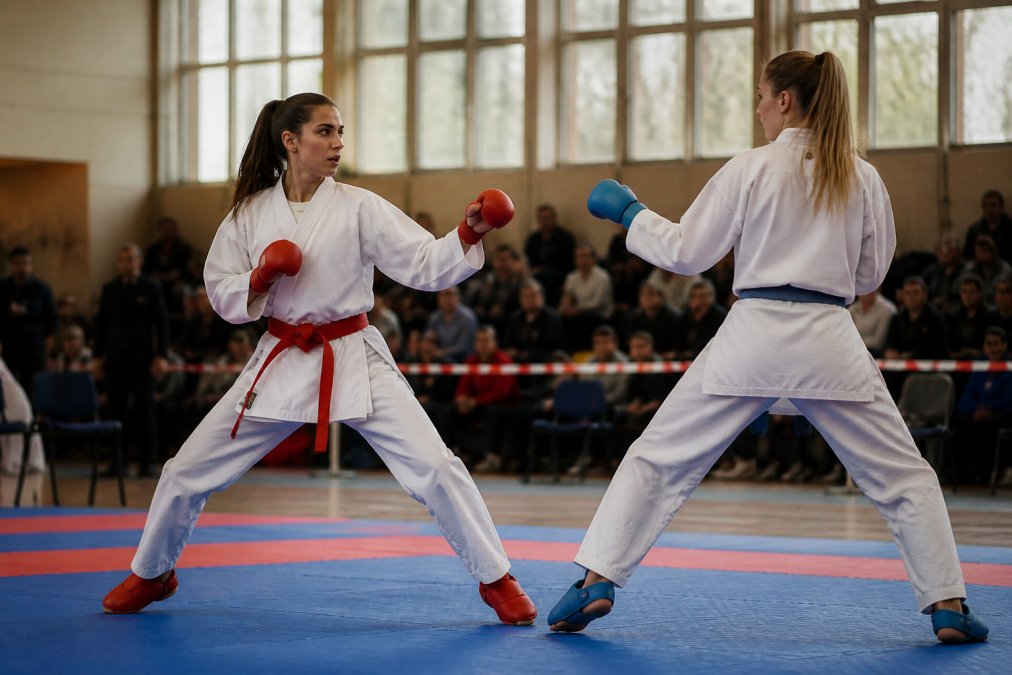
Kumite gis prioritize speed and freedom of movement. Lightweight fabrics (5-8 oz) minimize drag during explosive kicks and rapid directional changes. The cut is typically more relaxed through the shoulders and legs, allowing deep stances and high kicks without resistance. Breathability matters enormously because kumite generates intense heat during sparring bouts. Moisture-wicking technology keeps sweat from adding weight and discomfort during competition.
Kata gis emphasize precision and auditory feedback. Heavier fabrics (10-13.5 oz) produce the distinctive snap that judges listen for during performances. The cut is more tailored and structured, with higher waistbands and narrower sleeves that create clean lines and sharp angles. This isn't about comfort, it's about aesthetics and the acoustic properties that distinguish elite kata performances from mediocre ones.
The fabric density difference is substantial. A kumite gi's lightweight construction keeps you cool and responsive. A kata gi's heavyweight blend would feel restrictive during kumite sparring but produces the stiffness necessary for kata's controlled, precise movements. Wearing the wrong type is like competing in the wrong shoes, technically possible, but strategically flawed.
Polycotton vs. Cotton Gi: Fabric Performance Breakdown
The cotton-polyester blend ratio determines how your gi feels, performs, and ages. This choice affects durability, breathability, shrinkage risk, and how the fabric responds to repeated washing.
Pure cotton gis (100% cotton) offer maximum breathability and a traditional feel many practitioners prefer. Cotton absorbs moisture naturally and feels soft against skin. The downside: pure cotton shrinks more aggressively during washing and requires careful maintenance to prevent damage. The fabric also takes longer to dry and can develop odor more easily with intensive training.
Polycotton blends (typically 60% cotton / 40% polyester or 70% polyester / 30% cotton) balance breathability with durability. The polyester component reduces shrinkage significantly, speeds drying time, and improves tensile strength, meaning seams resist tearing under stress. Polycotton fabrics maintain their shape better through repeated washings and competitive use. The trade-off is slightly less breathability compared to pure cotton, though quality polycotton blends minimize this difference.
High-polyester blends (70%+ polyester) prioritize performance and durability. These fabrics dry quickly, resist shrinkage almost entirely, and offer superior strength for high-stress competition. They're particularly common in kumite gis where lightweight performance matters. The fabric feels less traditional but delivers measurable advantages in durability and maintenance ease.
PUNOK KUMITE GI SET WKF approved →
According to research from the American Textile Manufacturers Institute, polycotton blends maintain tensile strength better than pure cotton after 50+ wash cycles, making them more practical for competitive athletes training multiple times weekly.
The best choice depends on your training intensity and maintenance preferences. Casual practitioners might prefer pure cotton's feel. Serious competitors benefit from polycotton or high-polyester blends that survive rigorous training schedules without degradation.
Karate Gi Sizing Guide for Proper Fit and Movement
Incorrect sizing ruins even excellent gis. A gi that's too large creates excess fabric that bunches during movement, reducing your visual presentation and restricting mobility. Too small, and you can't move freely, plus you risk seam failure under stress.
Proper fit requires understanding how gis are sized. Unlike regular clothing, gi sizing is based on height and weight ranges, not standard S/M/L designations. Sizes typically range from 00 (smallest) through 6 (largest), with each size covering specific height and weight parameters.
Jacket fit should allow two fingers of space between your body and the fabric when buttoned. The jacket should reach your wrist when arms hang naturally at your sides. Sleeves that are too short restrict movement and look unprofessional. Sleeves that are too long bunch at the wrists and create safety hazards during kumite.
Pant fit requires similar precision.
Durability and Long-Term Wear: What Lasts Beyond Competition
A quality gi should survive years of intensive training. This requires understanding fabric performance, stitching quality, and maintenance practices that extend equipment life.
Making Your Choice: Top Tokaido Alternatives Compared
| Gi Model | Type | Fabric Weight | Best For | Key Feature |
|---|---|---|---|---|
| PUNOK Kumite | Kumite | 5 oz (lightweight) | Speed-focused competitors | Moisture-wicking, agile movement |
| Punok Takyon Kumite | Kumite | 5 oz (ultralight) | Elite kumite athletes | Dual jackets (red/blue), eco-friendly |
| Punok Takyon Gold | Kumite | 5 oz (ultralight) | Premium competitors | 70% recycled, WKF Green certified |
| Punok Kata | Kata | 10-12 oz (heavyweight) | Kata specialists | Exceptional snap, traditional cut |
| Punok Vertex Kata | Kata | 13.5 oz (premium) | Elite kata athletes | Superior snap, Japanese tournament cut |
For kumite competitors prioritizing affordability, the PUNOK KUMITE GI SET at $179.99 delivers WKF approval and lightweight performance without premium pricing. The moisture-wicking fabric handles intense sparring sessions, and the reinforced stitching survives repeated competitions.
Conclusion
Finding the right tokaido alternatives competition gis comes down to matching fabric specifications, WKF approval status, and construction quality to your specific discipline and competition level. Kumite athletes need lightweight, breathable designs that maximize speed. Kata specialists need heavier fabrics that deliver the snap judges expect. Both require reinforced stitching and quality materials that survive intensive training.
Frequently Asked Questions
What makes a gi WKF approved, and why does it matter for competition?
WKF approval means the uniform meets strict World Karate Federation standards for fabric weight, construction, and fit. Approved gis must pass durability tests, seam reinforcement checks, and sizing specifications. Competing in a WKF-approved gi eliminates equipment disqualifications and ensures your uniform meets international tournament rules. All Punok options at BlackBeltShop carry WKF certification, so you compete with confidence.
How does polycotton compare to pure cotton in a competition gi?
Polycotton blends (typically 60% cotton, 40% polyester) offer better moisture-wicking, faster drying, and reduced shrinkage compared to pure cotton. Cotton provides a softer feel and superior breathability but shrinks more and takes longer to dry between training sessions. For competition, polycotton dominates because it maintains its shape through repeated washings and intense training. Punok's heavyweight kata gis use this blend to balance durability with comfort.
What's the difference between kumite and kata uniforms?
Kumite gis prioritize speed and mobility with lightweight fabric (5oz-8oz) and looser cuts for explosive movement and grappling. Kata gis use heavier fabric (10oz-13.5oz) for crisp snap sounds and a structured silhouette that impresses judges. Kumite uniforms need breathability and flexibility; kata uniforms need stiffness and acoustic properties. Choosing the wrong type limits your performance in your specific discipline.
How do I know what size gi to order if I'm between sizes?
Measure your height and weight, then consult the size chart provided with each uniform. Most gis size by numeric range (sizes 2-6 typically cover adults; sizes 00-2 for youth). If you're between sizes, choose the larger size for kumite (you need movement room) and the smaller size for kata (a snug fit looks sharper). Punok gis include size-specific waistband options: elastic for younger practitioners, drawstring for adults, ensuring a secure fit across all sizes.
Will a budget gi fall apart after a few months of regular training?
Durable gis use reinforced stitching, quality fabric blends, and tested seam construction to withstand hundreds of training hours. Punok competition gis feature seam reinforcement in high-stress areas and fabric that maintains its integrity through repeated washings.