

Table of Contents
- The Real Reason Cheap Gis Tear: It Starts With the Weave
- Cotton vs. Poly-Cotton Blends: What the Label Doesn't Tell You
- Stitch Density and Seam Reinforcement: Where Cheap Gis Fail First
- Single vs Double Weave Gi: Which One Survives Your Training?
- How to Measure for Martial Arts Gi and Avoid Stress Point Tears
- Gi Maintenance and Care Tips: Make Any Gi Last Longer
- Repair vs. Replace: The Cost-Benefit of a Torn Gi
- Final Thoughts on Why Cheap Gis Tear and What to Buy Instead
- Frequently Asked Questions
Last Updated: September 6, 2026
The Real Reason Cheap Gis Tear: It Starts With the Weave
The short answer to why do cheap gis tear easily is that they are built from low-density fabric with weak structural integrity, and the failure begins long before you step on the mat. A gi is essentially a woven textile engineered to withstand repeated tensile load, gripping, and abrasion. When manufacturers cut costs, they reduce the thread count and use lower-grade cotton, producing a fabric that looks fine on day one but degrades rapidly under training stress. The pattern is consistent: the weave density, not the brand label, determines whether a gi survives its first year of regular practice.
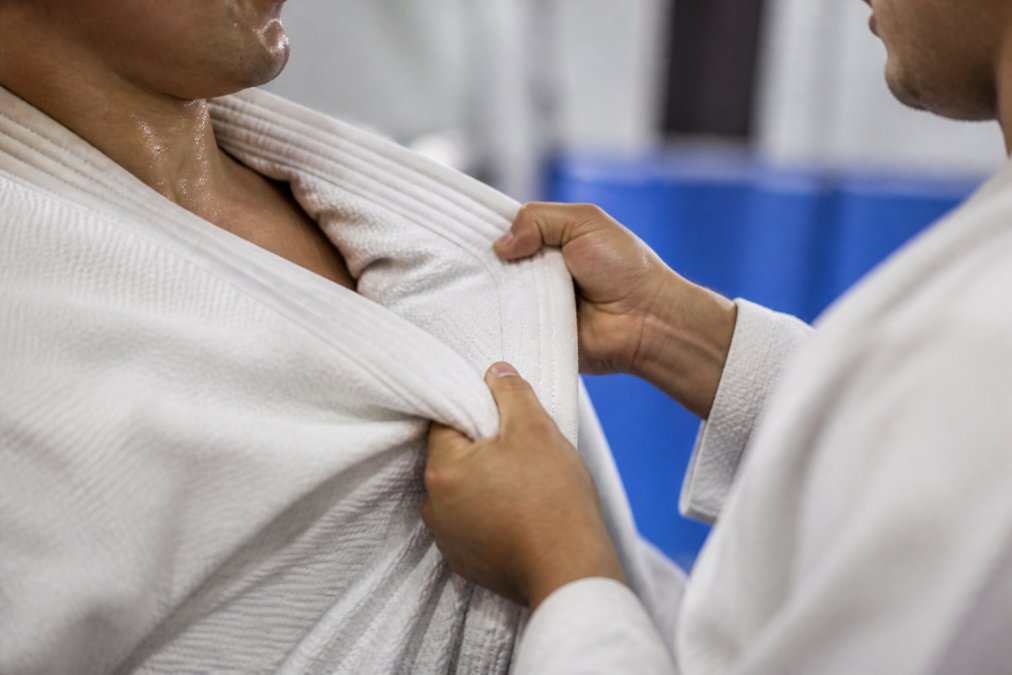
Cheap gis tear easily because the loose weave allows fibers to shift and abrade against each other during every scramble and grip fight. High-quality single weave and double weave fabrics pack more yarn per square inch, creating a tighter surface that resists tear resistance and abrasion. The visible difference is lapel thickness and fabric density, but the invisible difference is how the cotton cellulose fibers hold up under repeated washing and friction.
Cotton vs. Poly-Cotton Blends: What the Label Doesn't Tell You
Material composition matters more than most buyers realize. A 100% cotton gi offers traditional feel and breathability, but the fiber quality varies dramatically between a premium long-staple cotton and the short, brittle fibers used in budget uniforms. Short fibers break down faster, leading to fabric thinning at stress points like the shoulders and knees.
Poly-cotton blends address this by adding synthetic fibers that boost tensile strength and abrasion resistance. The trade-off is a slightly different texture and less of that traditional cotton "break-in" feel. For practitioners who train multiple times per week, a quality poly-cotton blend often outlasts a cheap pure-cotton gi by a significant margin. Pre-shrunk fabric also matters, since uncontrolled shrinkage after the first wash cycle puts uneven tension on seams and accelerates fiber degradation.
Stitch Density and Seam Reinforcement: Where Cheap Gis Fail First
A common mistake is inspecting the fabric while ignoring the stitching. Cheap gis tear easily at the seams because the stitch count per inch is too low to distribute tensile load across the joint. When you grip a collar or your opponent grabs your sleeve, the stress concentrates on individual stitches rather than spreading across a reinforced seam.
Quality control in premium uniforms includes bar-tack stitching at high-stress corners, reinforced shoulder seams, and triple-stitched hems. Entry-level gear often skips these details entirely. Run your finger along the inside of a gi jacket: if you can see gaps between stitches or feel loose threads, that uniform will fail at the seam long before the fabric wears through. Seam reinforcement is the cheapest durability upgrade a manufacturer can make, and its absence is the clearest signal of a gi built to a price, not to a standard.
Single vs Double Weave Gi: Which One Survives Your Training?
Training frequency should dictate your weave choice. A single weave gi is lighter, cooler, and perfectly adequate for two to three sessions per week, especially for beginners or kids' martial arts classes. A double weave gi offers roughly twice the fabric density, delivering superior durability and abrasion resistance for intense daily training and grip-heavy grappling styles.
| Weave Type | Best For | Durability | Weight | Price Range |
|---|---|---|---|---|
| Single Weave | Beginners, light training | Moderate | Lightweight | Lower |
| Double Weave | Competitive training, daily use | High | Heavier | Higher |
The Gameness Air Pro Gi 3.0 uses a comb weave construction that balances lightweight comfort with competition-grade durability, making it a strong option for jiu-jitsu athletes who need mobility without sacrificing structural integrity. For karate and taekwondo students, the Macho 7oz Student Uniform offers a lightweight feel suited to regular practice, while the Adidas Grand Master Gi brings World Karate Federation approved construction for competitors who need regulation-compliant gear.

How to Measure for Martial Arts Gi and Avoid Stress Point Tears
Proper fit prevents many tears before they start. A gi that is too tight places constant tensile load on the shoulder and armpit seams every time you raise your arms. A gi that is too loose gives your training partner excess fabric to grip, increasing abrasion and strain on the weave.
To measure for martial arts gi correctly, take your height and weight as the starting point, then check the brand's specific size chart, since sizing varies between manufacturers. The jacket sleeves should reach your wrist when your arms are extended, and the pants should sit at your hip with room to squat comfortably. Pay attention to the lapel: a thin, flimsy lapel is a durability red flag, because the collar absorbs more gripping stress than any other part of the uniform.
Gi Maintenance and Care Tips: Make Any Gi Last Longer
Most care guides stop at "wash cold and hang dry," but they never explain the why behind the rule. The science of fabric degradation is straightforward, and once you understand it, you will stop making the mistakes that kill cheap gis long before their time.
Cotton is nearly pure cellulose. Each fiber is a chain of glucose molecules held together by hydrogen bonds. When you machine dry a gi on high heat, you are forcing those bonds to flex and break. The fabric shrinks because the fibers kink and tighten, and it weakens because the broken bonds cannot be reformed. Over a single season of high-heat drying, a gi can lose a measurable percentage of its tensile strength. The same process happens, more slowly, when you wash in hot water. Cold water and air drying are not fussy preferences; they are the only methods that preserve the cellulose structure.
Ultraviolet light is the second hidden killer. If you dry your gi outside in direct sun, the UV radiation attacks the same cellulose chains, causing a process called photodegradation. The fabric becomes brittle and chalky, and the color fades because the dye molecules are also breaking apart. A white gi that has yellowed or grayed from sun exposure has already lost structural integrity, even if it still looks wearable. Dry your gi in the shade or indoors near a fan.
Sweat and bacteria are the third factor. Human sweat is slightly acidic, and when it soaks into the fabric and dries, it leaves behind salts and enzymes that slowly eat at the cotton fibers. This is why a gi left in a gym bag for two days develops a permanent odor and a weakened weave. The bacteria multiply, and their metabolic byproducts degrade the cellulose. Wash your gi within a few hours of training, and if you cannot, at least hang it to dry immediately so the bacteria cannot thrive in a damp, dark environment.
Bleach is the fourth and most aggressive chemical threat. Sodium hypochlorite, the active ingredient in chlorine bleach, does not discriminate between a stain and a cotton fiber. It oxidizes both, breaking the cellulose chains and leaving the fabric thinner and weaker after every wash. Oxygen-based bleaches are gentler, but they still cause some degradation over time. For white gis, a sports-specific detergent with optical brighteners will keep the fabric white without the structural damage.
The practical takeaway is that the most expensive gi in the world will tear early if you dry it on high heat, bleach it weekly, and leave it wet in a bag. Conversely, a budget gi can survive years of training if you treat the fabric with the same care you would give a technical garment. The maintenance routine matters more than the price tag.
Repair vs. Replace: The Cost-Benefit of a Torn Gi
When a gi fails, the first question is always the same: fix it or toss it? The answer depends on where the tear is, what the fabric looks like around the tear, and how the gi was constructed in the first place. A simple rule of thumb is that a seam failure is repairable, but a fabric tear is a death sentence.
Seam failures are almost always repairable. The stitching is the weakest link in any gi, and when it fails, the fabric underneath is usually still intact. A split seam at the cuff, hem, or shoulder can be re-stitched with a heavy-duty sewing machine and a polyester thread. Polyester is the correct choice because it has a slight stretch and high abrasion resistance, whereas cotton thread will rot and break within months. When you re-stitch a seam, use a zigzag or triple-stitch pattern to distribute the load across a wider area, and reinforce the ends with a bar-tack to prevent the new seam from unraveling. A proper repair on a seam will outlast the original stitching if you use a higher stitch density than the factory did.
Fabric tears are a different story. If the rip is in the middle of a panel, away from a seam, it means the weave itself has failed. The yarns have broken or pulled apart, and the surrounding fabric is likely thinner and weaker than it looks. Patching a fabric tear is possible, but the patch will create a rigid spot that transfers stress to the edges of the patch, causing new tears to form. In most cases, a fabric tear in the jacket body or the pants seat is the end of the gi's useful life.
The lapel is a special case. The collar absorbs more gripping stress than any other part of the gi, and it is also the most complex to repair. A lapel that is pulling apart at the fold has a structural problem: the inner padding has shifted or the outer fabric has stretched. Re-stitching the surface will not fix the underlying instability. If the lapel feels soft, floppy, or wrinkled after washing, the gi is compromised. Replacing the lapel is a specialized tailoring job that often costs more than a new entry-level gi.
Here is a practical decision framework for any tear:
- Location: Is the tear on a seam or in the middle of a panel? Seam = repair. Panel = replace.
- Fabric condition: Run your fingers over the area around the tear. Does the fabric feel thick and rough, or thin and smooth? Thick = repair. Thin = replace.
- Tear length: Is the rip under two inches, or is it running? A short tear that has not propagated can be stabilized. A running tear will continue to grow no matter how well you patch it.
- Gi age and original quality: A gi that cost less than a typical dinner out and has already lasted six months of training has served its purpose. A premium gi that is two years old and has a single seam split is worth repairing.
- Safety: If the tear is in a spot that could catch a finger or expose skin during sparring, replace the gi. A torn gi is a training hazard, not just an aesthetic issue.
The economics of repair versus replacement are simple. A basic seam repair costs a few dollars in thread and thirty minutes of your time. A replacement gi costs significantly more. If the fabric is sound, a repair is always the better financial move. If the fabric is compromised, no amount of stitching will save it. The moment you feel thin, worn fabric at a stress point, start shopping for a replacement and retire the old gi to a backup role for light drilling only.
Final Thoughts on Why Cheap Gis Tear and What to Buy Instead
The pattern is consistent across every price point: cheap gis tear easily because manufacturers cut corners on weave density, stitch count, and material quality. You do not need to spend a fortune to get a durable uniform, but you do need to know what to look for. Check the weave, inspect the stitching, and match the construction to your training frequency.
At BlackBeltShop, we stock uniforms that survive real training, from the Gameness Air Pro Gi 3.0 for jiu-jitsu athletes to the Adidas Grand Master Gi for karate competitors, all priced 10-40% below regular retail. Every gi in our catalog is selected for durability, and our team can help you find the right size and weave for your discipline. Check out our full selection and train with gear that will not quit on you.

Frequently Asked Questions
How long should a BJJ gi last?
A quality gi lasts 2-4 years with regular training (3-5 sessions per week). Cheap gis often fail within 6-12 months because of low fabric density and weak stitching. Rotating between two gis extends their life significantly, since the fabric gets time to recover and fully dry between sessions. If you train daily, owning 3 gis is the practical way to protect your investment and avoid premature tears.
Does fabric weight affect the durability of a gi?
Yes, but weight alone doesn't tell the whole story. A heavier gi (12oz or more) usually means denser fabric, which resists abrasion better than a 7oz uniform. However, a lightweight gi can still be durable if it uses a tight single weave or a ripstop panel in high-stress areas. The real question is weave density and stitch count, not just ounces per square yard.
How can I tell if a gi is high quality before buying?
Check three things: fabric density, stitch count, and seam reinforcement. Hold the fabric up to light, if you can see through it easily, the weave is too loose. Look at the collar stitching, quality gis have dense, tight stitching that doesn't pull apart. Reinforced seams at the armpits, crotch, and skirt attachment points signal a gi built for grappling. Pre-shrunk cotton also prevents the shrinkage that stresses seams.
What are the most common stress points for gi tears?
The collar and lapel take the most abuse from grips. The armpit seams tear during arm drags and submissions. The skirt rips when training partners grab it for control. Knee patches wear out from guard work and takedowns. A quality gi reinforces these areas with extra stitching or double-layered fabric. If you notice thinning or fraying at these points, that gi is approaching the end of its usable life.
Choosing a gi is a balance between budget and durability, and the cheapest option rarely wins over twelve months of training. The right approach is to buy a properly constructed uniform from a retailer that stands behind its gear. Get started with BlackBeltShop and find a gi built to last through every class, every competition, and every wash cycle.