

Table of Contents
- Why Look Beyond MMAOverload for Competition-Ready Gear
- What Makes Sparring Gear Competition-Legal?
- Top Picks: Best Martial Arts Gear Brands for the Ring
- Quick Comparison: 5 Competition-Ready Gear Sets
- How to Choose MMA Gloves for Competition
- What to Look For in Durable MMA Sparring Gear
- Budget-Conscious Professional Setups Without the Risk
- Final Word: Finding Your Competition Gear Alternative
- Frequently Asked Questions
Last Updated: September 9, 2026
Competition season is the worst time to discover your gear doesn't meet the rules. Fighters get turned away at registration every year because their equipment fails inspection. Finding an MMAOverload alternative for competition gear means prioritizing sanctioning body compliance over brand loyalty.
Most retailers stock general-purpose training gear that falls short on technical specifications. The difference between a legal setup and a rejected one comes down to padding thickness, material composition, and approved closures. We'll show you how to evaluate gear against real regulations and which complete sets deliver professional-grade protection.
Why Look Beyond MMAOverload for Competition-Ready Gear
The core problem with single-retailer loyalty is limited selection. When one store dominates your gear decisions, you choose from whatever they stock rather than what your discipline requires. Competition-ready equipment demands a broader view.
Dedicated martial arts suppliers offer better discipline-specific options. Karate point fighting, taekwondo Olympic sparring, and kickboxing each carry distinct equipment requirements. A general MMA shop rarely carries the full spectrum of WAKO-approved pieces you need.
Price transparency matters too. When you buy through a retailer that sells at 10-40% below regular retail, you can afford professional grade gear without sacrificing your training budget.
What Makes Sparring Gear Competition-Legal?
Competition-legal sparring gear meets the specific technical standards set by the governing body of your event. Those standards typically cover impact absorption, padding dimensions, coverage area, and closure security.
The materials determine legality as much as the design. High-density foam and durable synthetic exteriors are standard for approved gear because they provide consistent impact absorption. Leather or vinyl-dipped constructions each have their place, but the approval comes from meeting published specifications, not from brand reputation.
Understanding Sanctioning Body Rules
Sanctioning bodies like WAKO publish detailed equipment regulations that change periodically. Checking the current rulebook before you buy is the only reliable way to confirm compliance. A bundle explicitly engineered for WAKO competition, such as the WAKO Determination Bundle Sport Karate Combo, removes that research burden.

Amateur regulations often differ from professional requirements. Amateur events typically mandate more protective padding because the athletes have less experience managing impact. If you're competing under an amateur banner, expect stricter headgear and shin guard requirements than what professionals wear.
Breaking Down the Approval Process
Most governing bodies do not test every product. Instead, they publish a technical specification, often referencing an established standard like CE EN 13277, and require manufacturers to self-certify or submit samples for independent lab testing. A logo or stamp means that specific production run met the published thresholds.
For example, WAKO's rules specify minimum padding thickness for shin guards (typically around 1 cm of impact-absorbing foam) and require headgear to cover the crown, temples, and ears without obstructing vision. IBJJF rules, by contrast, focus less on padding specs and more on prohibiting materials like hard plastic or metal reinforcements. A karate point fighter and a jiu-jitsu competitor can walk out of the same store with completely different legal setups.
The Inspection Reality Check
At registration, officials are not testing your gear with laboratory instruments. They are performing a visual and tactile inspection. They check for:
- Padding integrity: No compressed, cracked, or missing foam sections.
- Coverage: All required areas are protected per the event rulebook.
- Closure security: Hook-and-loop straps are fully functional and won't come loose during a bout.
- Material condition: No tears, cracks, or exposed hard edges that could cut an opponent.
A Unique Angle: The Compliance Gap No One Talks About
Most retailers and guides stop at "check your rulebook." What they miss is that sanctioning bodies frequently update their equipment lists, and older approved models get phased out. Gear that was legal last season may not appear on the current approved list, especially for headgear and shin guards.
The practical takeaway: when you find gear that fits well and meets current standards, buy a backup before the next rulebook revision. Look for gear that explicitly states which sanctioning body and rulebook version it complies with, not vague marketing language like "competition approved."
Top Picks: Best Martial Arts Gear Brands for the Ring
Our top pick for competition-ready gear is BlackBeltShop, because the catalog is curated around regulation compliance rather than general fitness trends. As a veteran-owned business, the team understands reliable equipment is a matter of safety. The range spans karate, taekwondo, jiu-jitsu, and MMA.
Macho Dyna stands out for full sparring sets that balance protection with mobility. Their foam-dipped construction keeps weight down while maintaining impact absorption. The Macho Warrior Combo adds a chest guard for disciplines requiring torso protection.

ProForce delivers solid value for youth competitors and beginners. Their Lightning 5-piece set includes headgear, hand guards, foot guards, and a free mouthpiece, covering the essentials. For parents equipping growing kids, this entry point makes financial sense.
Quick Comparison: 5 Competition-Ready Gear Sets
| Gear Set | Price | Included Pieces | Best For |
|---|---|---|---|
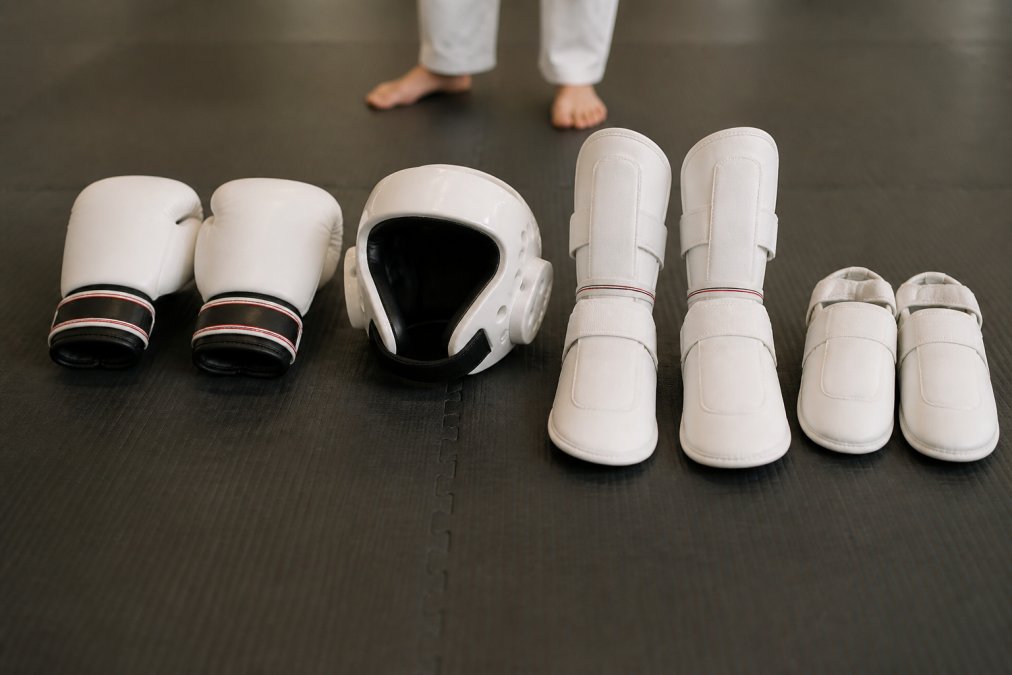
| WAKO Determination Bundle | $176.99 | Headgear, gloves, shin guards, foot protectors | WAKO sanctioned events |
| Macho Dyna 9-Piece Combo | $179.99 | Shin guards, kicks, gloves, headgear with face shield | Full-contact sparring |
| Macho Dyna Combo Set | $124.00 | Gloves, shin guards, foot protectors, headgear | Taekwondo and karate |
| Macho Warrior Combo | $159.99 | Headgear, gloves, shin guards, foot protectors, chest guard | Maximum protection |
| ProForce Lightning 5-Piece | $105.99 | Headgear, hand guards, foot guards, mouthpiece | Beginners and youth |
The WAKO Determination Bundle leads because every component carries official approval for sport karate and kickboxing. That compliance is worth the investment when your entry fee and travel costs depend on passing inspection.
How to Choose MMA Gloves for Competition
Competition gloves are chosen by weight class and discipline rules, not personal preference. Point fighting gloves prioritize speed and scoring surface, while continuous fighting gloves demand more padding. Check your event rulebook for the required ounce rating before shopping.
Fit determines both safety and performance. A glove that shifts during a match leaves your knuckles exposed and compromises striking accuracy. Look for secure hook-and-loop closures that lock the wrist in place, and try gloves with your hand wraps on.
The best martial arts gear brands design competition gloves with the scoring system in mind. WAKO-approved point fighting gloves optimize the striking surface for clean point detection. Using training gloves in competition puts you at a disadvantage.
What to Look For in Durable MMA Sparring Gear
Durable MMA sparring gear comes down to material quality and construction method. High-density foam maintains its impact absorption through repeated strikes, while cheaper foams compress and harden over time.
Seams and closures fail before the padding does. Inspect stitching around stress points and hook-and-loop attachment areas monthly and replace anything that shows wear before it fails during a match.
Ventilation affects both comfort and durability. Integrated ventilation channels reduce heat buildup, meaning less sweat saturation and slower material breakdown.
The 6-Month High-Intensity Sparring Test
Most gear reviews are written after a few weeks of light use. That does not tell you how equipment survives a full competition training camp. Here is what typically breaks down at the six-month mark of training three or more times per week:
- Foam compression: The most common failure. High-density foam rated for repeated impact will lose 10-15% of its thickness after roughly 200 hours of heavy bag and partner work. Once foam compresses, it transfers more impact force to your bones and joints. The test: press your thumb into the padding. If it does not spring back within a second, the foam is breaking down.
- Strap fatigue: Hook-and-loop closures are the second failure point. After months of constant adjustment, the loops stretch and the hooks lose their grip. A shin guard that shifts during a round is a safety hazard, not just an annoyance. The test: strap the gear on and try to pull it off without undoing the closures. If it slides, replace the straps or the gear.
- Exterior cracking: Vinyl-dipped foam develops hairline cracks at flexion points, usually the knuckle area of gloves and the ankle bend of shin guards. These cracks let moisture into the foam core, accelerating breakdown. The test: flex the gear fully and look for white stress lines or visible cracks.
Material Longevity by Construction Type
Different construction methods have different lifespans under heavy training:
| Construction Type | Typical Lifespan (High-Intensity) | Failure Mode | Best Use Case |
|---|---|---|---|
| Vinyl-dipped foam | 6-9 months | Surface cracking, foam compression | Youth, beginners, low-frequency training |
| Synthetic leather over foam | 12-18 months | Seam failure, strap wear | Regular sparring, competition training |
| Full-grain leather over high-density foam | 24+ months | Slow foam compression, leather patina | Professional competition, daily training |
These are general patterns, not guarantees. The key variable is training frequency and whether you let gear fully dry between sessions. Gear stored damp breaks down twice as fast as gear that airs out after every use.
The 5-Point Monthly Inspection Checklist
To catch failures before they affect your competition eligibility, run this quick check at the start of each month:
- Compression test: Press each padded area firmly. Replace if foam does not rebound.
- Strap test: Fasten all closures and attempt to pull the gear off. Replace if it shifts significantly.
- Seam scan: Run your fingers along every stitched edge. Replace if you feel any popped threads or gaps.
- Surface check: Flex all joints and look for cracks, peeling, or delamination.
- Odor test: If gear retains a sour smell after washing and air drying, the foam is harboring bacteria and has likely lost its closed-cell integrity.
Why This Longevity Data Matters for Competition
Competition inspection does not test foam density or strap tension. Officials look for visible damage and gross compression. But the real risk is invisible: a shin guard that has lost 20% of its padding thickness still looks fine but transfers significantly more impact force. Tracking your gear's age and training hours is as important as checking the rulebook.
Budget-Conscious Professional Setups Without the Risk
Buying professional grade gear on a budget requires targeting complete sets rather than assembling pieces individually. Combo sets bundle essential components at a lower combined price.
The ProForce Lightning set at $105.99 proves entry-level pricing doesn't have to mean substandard protection. Vinyl-dipped foam construction provides reliable impact absorption for youth and beginner competitors.

Sizing for non-standard body types requires extra attention when buying online. The Macho Dyna line offers child sizes from small through large plus adult small through XL. Always measure against the provided sizing charts rather than guessing from your street shoe size.
Final Word: Finding Your Competition Gear Alternative
The search for an MMAOverload alternative for competition gear ends when you prioritize regulation compliance, material quality, and honest pricing. Competition-ready equipment isn't about the biggest brand name, it's about gear that passes inspection and protects you through every round. BlackBeltShop delivers that combination.
Check out the WAKO Determination Bundle Sport Karate Combo for officially approved competition gear, or explore the Macho Dyna 9-Piece Combo for full-contact sparring protection. Get started with BlackBeltShop and step into your next competition with gear that's ready for inspection.
Frequently Asked Questions
What is the best MMA gear brand for competition?
There is no single best brand, but for competition you need gear that meets specific sanctioning body requirements. Brands like Macho and ProForce offer sets engineered with high-density foam and secure closures, which are common features in regulation gear. For WAKO-sanctioned events, look for gear that is officially approved, such as the WAKO Determination Bundle. Focus on the approval and fit rather than the brand name alone.
How do I choose between training gear and competition-specific equipment?
Training gear is often heavier and built for repeated impact, while competition-specific equipment is lighter and engineered for speed and agility, with padding placed for scoring. Competition gear must also comply with specific regulations on weight and padding thickness, which vary by organization. If you compete, you need gear that meets those technical specifications. For everyday sparring, prioritize durability and comfort over strict compliance.
How often should I replace my competition gear?
The lifespan depends on training frequency and intensity. For athletes training several times a week, inspect your gear monthly for signs of wear like cracking foam, torn synthetic leather, or frayed hook-and-loop closures. If the padding has compressed and no longer offers firm impact absorption, it is time to replace it. Most regular competitors replace gloves and shin guards annually to maintain safety and performance.
What features should I look for in durable MMA sparring gear?
Check the construction materials. Look for high-density foam, which holds its shape, and durable synthetic leather that resists tearing and is easy to wipe down. Secure closures, like hook-and-loop straps, are critical for keeping the gear in place. Reinforced stitching, especially on gloves, is a sign of longevity. Avoid gear with thin vinyl covers, which can crack and peel within months of intense training.